




What's Happening?
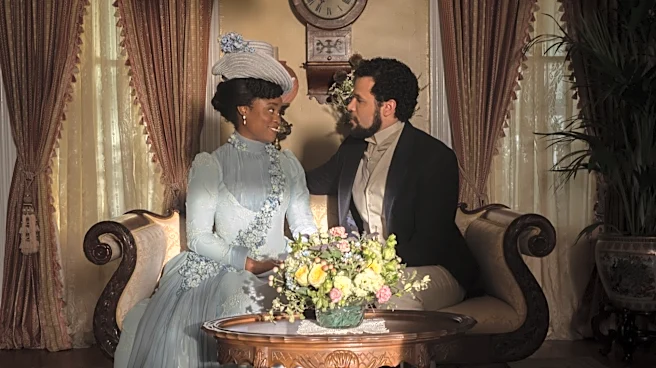
Peggy Scott's wedding to Dr. William Kirkland in 'The Gilded Age' serves as a central event, showcasing Black cultural heritage and exposing class distinctions within the Black elite of 1880s America. The ceremony features the Fisk Jubilee Singers and the tradition
of 'jumping the broom,' both deeply significant to African American history and identity. However, these elements are met with disapproval from William's mother, Elizabeth Kirkland, who views them as undignified and 'reminders of darkness.' This conflict highlights the differing perspectives on respectability and heritage between the Scotts, who embrace their post-emancipation traditions, and the Kirklands, who represent an older, more established Black family with a desire to distance themselves from symbols of enslavement. Despite the tensions, Peggy and William proceed with their desired ceremony, affirming their commitment to their cultural roots.
Why It's Important?
The wedding storyline is important for its nuanced portrayal of the Black community during the Gilded Age, demonstrating that it was not a monolithic entity but comprised of diverse experiences and class structures. The tension between Peggy's family and William's mother over cultural traditions underscores the complexities of identity and assimilation for Black Americans in the post-Civil War era. It reveals how even within a privileged Black elite, there were internal struggles over how to present oneself to society and what aspects of heritage to embrace or shed. This narrative enriches the historical understanding of the period by showing the resilience of Black cultural practices and the ongoing efforts to define Black identity amidst societal pressures and internal divisions.
What's Next?
The wedding, while a celebration, also sets the stage for ongoing family dynamics and potential conflicts between Peggy and her mother-in-law, Elizabeth Kirkland. The differing views on tradition and respectability are likely to continue influencing their relationship and potentially impact William's position between his wife and mother. The series may further explore how Peggy navigates her identity as a married woman within this complex social landscape, balancing her personal convictions with the expectations of her new family. This could lead to deeper explorations of intergenerational differences and the evolving nature of Black American culture in the late 19th century.
Beyond the Headlines
The inclusion of the Fisk Jubilee Singers and the 'jumping the broom' tradition in Peggy's wedding goes beyond mere plot points; they are powerful symbols of Black resilience and cultural reclamation. 'Jumping the broom,' a practice rooted in enslaved communities, became a way for Black Americans to affirm their unions when legal marriage was denied. Its re-adoption by Peggy, despite Elizabeth's objections, signifies a conscious choice to honor a past that some might prefer to forget. This storyline prompts reflection on how historical trauma and cultural pride intersect, and how individuals and communities choose to remember and celebrate their heritage. It also subtly critiques the idea that progress necessitates abandoning one's cultural roots, suggesting that true advancement can involve embracing and reinterpreting traditions.