




What's Happening?
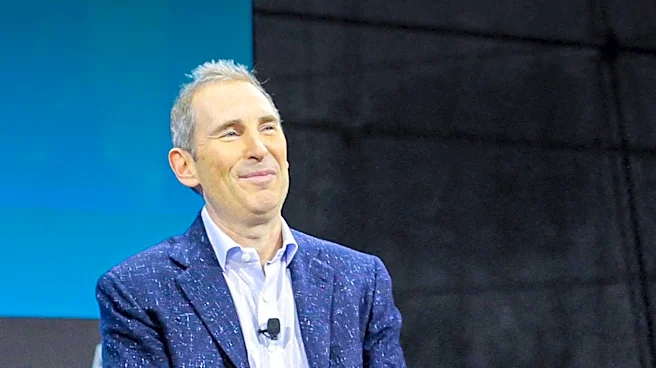
Rohit Prasad, a prominent artificial intelligence executive, has departed Amazon after 12 years to assume the role of CEO at Boston Dynamics, effective October 7. This leadership change occurs as the fields of AI and robotics increasingly converge. Boston Dynamics announced
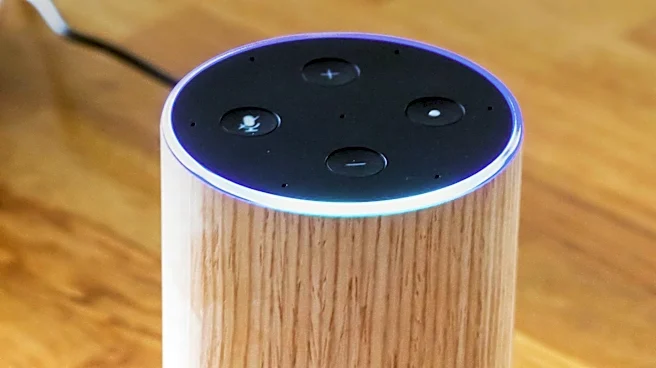
that Prasad's appointment is expected to accelerate the company's focus on "Physical AI," which combines advanced AI capabilities with its existing robotics expertise. Prasad previously served as senior vice president and head scientist for Alexa and Artificial General Intelligence at Amazon, where he was instrumental in developing Alexa into a widely used consumer AI service and led the creation of the Amazon Nova family of foundation models for enterprise AI applications. Before his tenure at Amazon, Prasad spent nearly 14 years at Raytheon BBN Technologies, leading machine-learning and speech-language research.
Why It's Important?
This appointment signifies a major strategic move for Boston Dynamics, indicating a strong push towards commercializing intelligent robotic systems. Prasad's extensive experience in bringing cutting-edge AI technologies to market, particularly with Alexa, is expected to be crucial in scaling Boston Dynamics' offerings for industrial, enterprise, and real-world applications. The concept of "Physical AI," where AI systems perceive, reason, and act in the physical world through robots, is a rapidly growing area with significant implications for various industries. This leadership change could accelerate the development and deployment of advanced robotics in sectors like logistics, manufacturing, and even consumer services, potentially transforming how businesses operate and how people interact with technology. For the U.S. tech landscape, it highlights the ongoing talent migration and the increasing importance of AI expertise in driving innovation across different domains.
What's Next?
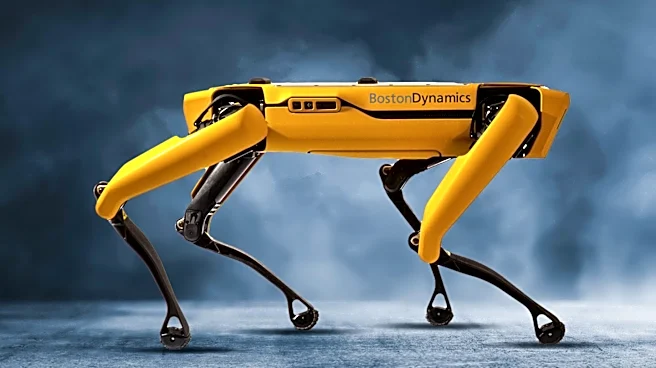
With Rohit Prasad at the helm, Boston Dynamics is poised to intensify its efforts in integrating advanced AI with its robotics platforms, such as Spot, Stretch, and Atlas. The company will likely focus on developing more autonomous and intelligent robotic systems capable of operating in complex real-world environments. This could involve further commercialization of existing products and the development of new applications for its robots. Prasad's background suggests a strong emphasis on product development and market expansion, potentially leading to new partnerships and increased adoption of Boston Dynamics' technology across various industries. His appointment also strengthens Boston Dynamics' ties with its parent company, Hyundai Motor Group, which is heavily investing in robotics and automation, suggesting a collaborative future in advancing Physical AI.
Beyond the Headlines
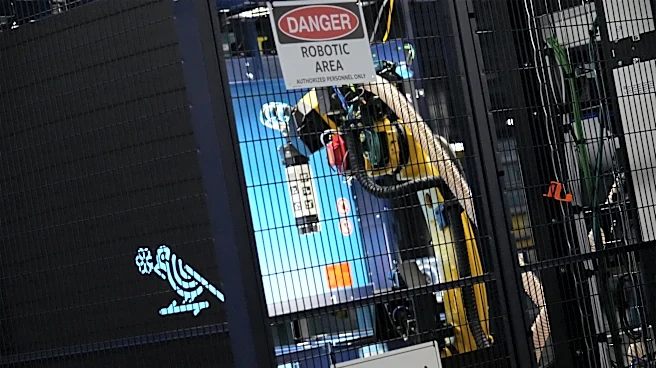
The move of a high-profile AI leader like Rohit Prasad to a robotics company like Boston Dynamics underscores a fundamental shift in the technological landscape: the convergence of artificial intelligence and physical robotics. This trend, termed "Physical AI," moves beyond purely digital AI applications to intelligent systems that can interact with and manipulate the physical world. This has profound implications for labor markets, industrial automation, and even ethical considerations surrounding autonomous machines. The commercialization of such advanced robotics could lead to significant productivity gains in various sectors but also raises questions about job displacement and the need for new skill sets. Furthermore, the development of robots capable of complex physical interaction, guided by sophisticated AI, pushes the boundaries of what is technologically possible and necessitates ongoing societal discussions about the responsible deployment of these powerful tools.