


What's Happening?
Reactive Drone, a Ukrainian drone manufacturer, has initiated the production of unmanned aerial vehicle (UAV) components in Poland. This strategic move was announced following the 'Win-Win' business forum, part of the ReBuild Ukraine program. The company's
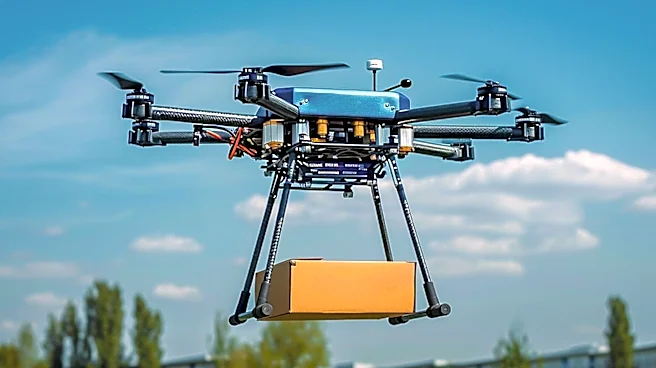
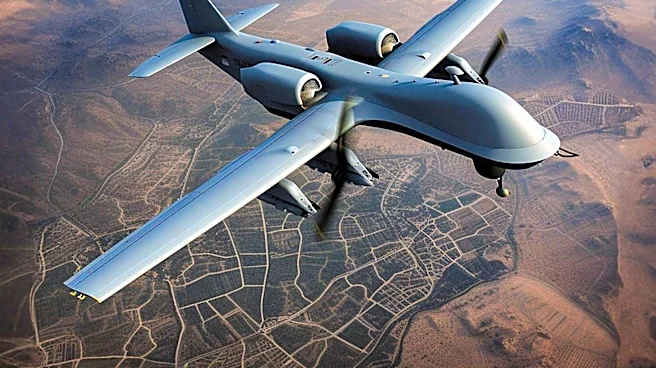
CEO, Oleksiy Kolesnyk, stated that over €5 million has already been invested in this new production facility. Reactive Drone emphasized that while component manufacturing is expanding in Poland, the final assembly of UAVs will continue to take place exclusively in Ukraine, adhering to national legislation. A primary motivation for this diversification is security risks, as Reactive Drone previously lost a manufacturing site due to a missile and drone attack, though no employees were injured in that incident. The company aims to bolster its supply chain reliability to ensure consistent equipment provision for Ukrainian service personnel facing daily combat risks. Reactive Drone is known for its Kazhan and Shmavik drones, launched from its POP Fly platform, with one Kazhan model, the E630, having been used for humanitarian aid deliveries.
Why It's Important?
This expansion by Reactive Drone into Poland signifies a critical step in securing and diversifying the supply chain for military-grade UAV components, which is vital for ongoing defense efforts. By establishing production outside Ukraine, the company mitigates direct risks associated with the conflict, ensuring a more stable and continuous supply of essential parts. This move also highlights the growing integration of Ukraine's defense industry with European markets, fostering potential for a more robust and interconnected European UAV ecosystem. For the U.S. and its allies, a resilient Ukrainian defense industrial base, supported by European partners, is crucial for maintaining Ukraine's defensive capabilities and reducing reliance on external military aid for certain components. The investment of over €5 million underscores a significant commitment to long-term operational sustainability and technological sovereignty within the defense sector, potentially influencing future defense procurement strategies and international collaborations.
What's Next?
Reactive Drone's continued investment in its Polish facility suggests a sustained effort to scale up component production, which could lead to increased output and potentially more advanced UAV capabilities for Ukrainian forces. The company's focus on maintaining final assembly in Ukraine indicates a strategic balance between security and national control over sensitive defense technology. This dual-location strategy might encourage other Ukrainian defense manufacturers to explore similar diversification models, further integrating Ukraine's defense industry with NATO and EU supply chains. Future developments could include increased collaboration with Polish defense contractors and technology firms, potentially leading to joint ventures or shared research and development initiatives. The success of this model could also influence policy discussions within the EU regarding support for Ukrainian defense industries and the establishment of a more unified European defense industrial base.
Beyond the Headlines
The establishment of UAV component production in Poland by Reactive Drone extends beyond immediate supply chain security; it represents a broader geopolitical and economic realignment. This move could be seen as a de facto integration of Ukraine's defense industrial capabilities into the European Union's defense framework, even as Ukraine is not yet a full member. It underscores the strategic importance of Poland as a logistical and industrial hub for supporting Ukraine's defense. Furthermore, this diversification strategy highlights the evolving nature of modern warfare, where resilience and redundancy in defense manufacturing are paramount. It also raises questions about intellectual property protection and technology transfer within such cross-border defense collaborations, setting precedents for future partnerships between nations facing similar security challenges. The investment also signals a long-term commitment to rebuilding and strengthening Ukraine's industrial capacity, even amidst ongoing conflict.