





What's Happening?
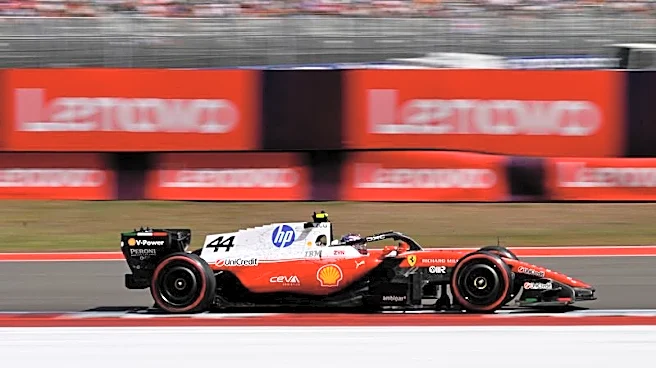
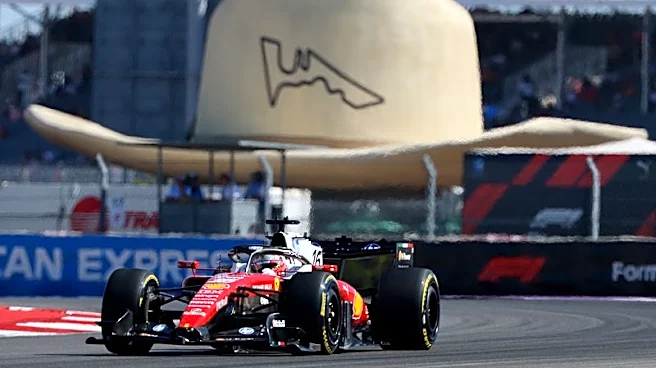
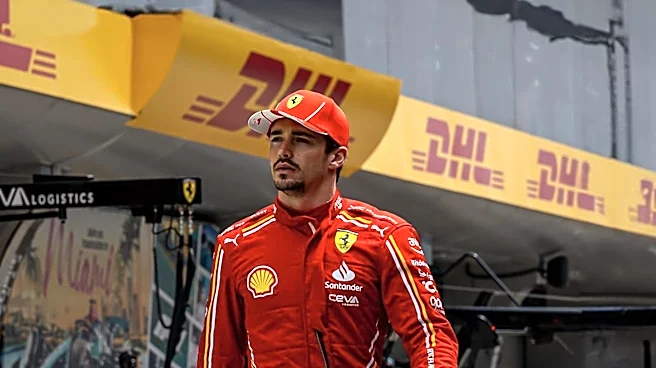
Ferrari driver Charles Leclerc voiced significant frustration following the qualifying session for the United States Grand Prix, where he and teammate Lewis Hamilton failed to secure a front-row starting position. Despite Ferrari showing strong pace in all
three practice sessions leading up to qualifying, Leclerc ended up in fourth place, with Hamilton in fifth. Leclerc attributed the team's struggles to difficulties in managing the Pirelli tires, noting that even minor changes in track temperature significantly impacted the car's handling. He specifically mentioned issues with the SF-26's performance in Q3, where a slight drop in track temperature led to tire warm-up problems and a loss of competitiveness. This outcome was particularly disappointing for Ferrari, as they had introduced significant aerodynamic upgrades for this race, including a revised sidepod profile, a reworked floor edge board, a modified diffuser, and underbody floor revisions.
Why It's Important?
This event highlights the critical role of tire management and environmental factors in high-stakes motorsport like Formula 1. Ferrari's inability to translate strong practice performance into a top qualifying spot due to tire temperature sensitivity underscores a recurring challenge for the team. For U.S. motorsport fans and the broader F1 audience, this outcome adds an element of unpredictability to the race, as a team that was expected to contend for pole position will now start further down the grid. The performance issues could also impact Ferrari's standing in the championship, especially as they are in the penultimate triple-header of the season. The team's struggle to optimize their car's performance under varying conditions, despite significant upgrades, raises questions about their strategic approach and technical execution, potentially affecting sponsor confidence and future development directions.
What's Next?
Ferrari will now focus on the main race, where both Charles Leclerc and Lewis Hamilton will aim to overcome their starting positions. Leclerc expressed optimism, recalling a previous victory at the Circuit of the Americas from a similar starting spot. The team will need to strategize effectively, considering the potential for high tire degradation and overtaking opportunities on the track. Engineers will likely analyze the qualifying data to understand the precise impact of track temperature changes on tire performance and adjust race strategy accordingly. The performance in the United States Grand Prix will be crucial for Ferrari to regain momentum and demonstrate the effectiveness of their recent aerodynamic upgrades, especially as the championship season draws to a close.
Beyond the Headlines
The incident sheds light on the intricate technical challenges faced by Formula 1 teams, where marginal environmental changes can have profound effects on performance. Leclerc's candid frustration also offers a glimpse into the immense pressure and competitive intensity within the sport. Beyond the immediate race outcome, Ferrari's ongoing struggle with tire optimization could have long-term implications for their car design philosophy and engineering priorities. The team's ability to adapt to these nuanced conditions is not just about winning races but also about maintaining its prestigious brand image and attracting top talent and investment in a highly competitive global sport. This situation underscores that even with advanced technology and substantial resources, success in F1 often hinges on mastering the most subtle variables.