
What's Happening?
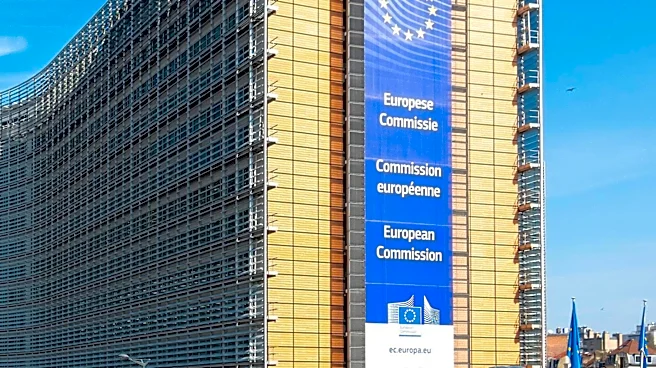
The European Commission has initiated an in-depth antitrust investigation into Coca-Cola Europacific Partners (CCEP), one of the largest European bottlers of The Coca-Cola Company brands. The probe, formally
opened on November 23, 2026, aims to determine if CCEP has violated EU competition rules, specifically Article 102 of the Treaty on the Functioning of the European Union (TFEU). The Commission is concerned that CCEP may have abused its dominant position in the wholesale supply of carbonated soft drinks and sports drinks to off-trade customers, such as supermarkets. Executive Vice-President Teresa Ribera stated that consumers should not pay more based on their country of residence within the EU. The investigation will examine whether CCEP hindered cross-border trade of these products and denied wholesale customers the ability to negotiate procurement on a multi-country basis. This follows unannounced inspections conducted at CCEP premises in several Member States in March 2025. CCEP operates in Belgium, France, Germany, Luxembourg, the Netherlands, Portugal, Spain, and Sweden, where it is identified as the largest supplier of carbonated soft drinks.
Why It's Important?
This investigation is significant as it targets practices that could undermine the integrity of the European Union's Single Market. If CCEP is found to have partitioned national markets, it could lead to higher prices and reduced choice for consumers across the EU. The case highlights the Commission's commitment to enforcing antitrust regulations to ensure fair competition and prevent dominant companies from exploiting their market power. For businesses operating within the EU, this probe serves as a reminder of the strict rules against practices that restrict cross-border trade. A finding against CCEP could result in substantial fines, potentially up to 10% of its total turnover, and could set a precedent for how large multinational corporations manage their distribution and pricing strategies across different EU member states. The outcome will influence market dynamics for soft drink suppliers and retailers, potentially encouraging more uniform pricing and availability across the bloc.
What's Next?
The investigation will proceed without a legal deadline, though the Commission has indicated it will treat the case as a priority. The next formal step, if concerns are substantiated, would be a statement of objections issued to CCEP. CCEP will then have the opportunity to respond and review the case file before any infringement decision or fine is imposed. The company has stated its commitment to complying with all applicable laws and regulations and will continue to cooperate fully with the Commission's inquiries. Historically, similar antitrust cases have taken approximately three years from the opening of formal proceedings to a final decision. A final infringement decision could also pave the way for damages claims from retailers and wholesalers affected by CCEP's alleged practices. The Commission is also consulting on new tools to address territorial supply constraints, indicating a broader push to tackle such issues beyond traditional competition law.
Beyond the Headlines
This case delves into the complex interplay between national markets and the overarching goal of a unified European Single Market. The alleged practices, such as varying pack volumes between member states or offering conditional wholesale price reductions, illustrate subtle yet effective methods companies might use to segment markets. The investigation underscores the ethical dimension of corporate responsibility, particularly for dominant players, to ensure their business practices do not inadvertently or intentionally disadvantage consumers or smaller competitors. The outcome could influence not only the beverage industry but also other sectors where large manufacturers operate across multiple EU countries, potentially leading to a re-evaluation of supply chain and pricing strategies to align with EU competition principles. It also highlights the ongoing challenge for regulatory bodies to adapt to evolving business models and ensure fair competition in a dynamic economic landscape.