






What's Happening?
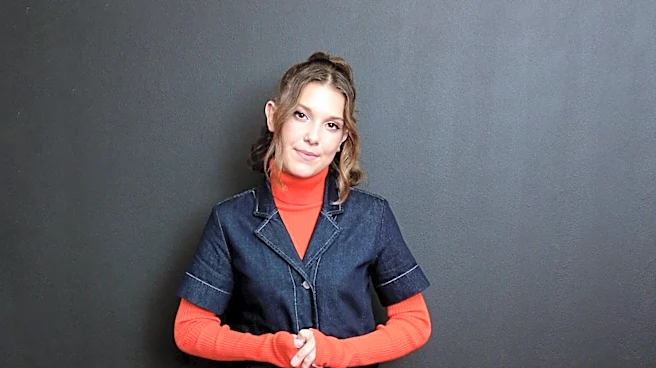
Actress Millie Bobby Brown is currently facing significant public scrutiny regarding her recent weight loss transformation. The commentary arose after she posted a video on Instagram promoting her Florence by Mills Fashion brand, where she modeled a matching
spandex outfit. Viewers quickly shifted their focus from the clothing to her body, with many claiming she appeared noticeably thinner. Comments ranged from expressions of disappointment about her perceived thinness to concerns about her health and the pressures of Hollywood. Some online users even speculated about the use of weight-loss drugs, such as GLP-1, Ozempic, or Mounjaro, despite a lack of confirmed information about Brown's health or medication use. This is not the first time Brown has been at the center of online discussions about her appearance, having faced similar scrutiny throughout her career, particularly as she transitioned from a child star to an adult.
Why It's Important?
This situation highlights the intense and often critical public gaze on celebrities, particularly young women who grow up in the public eye. The immediate and widespread commentary on Millie Bobby Brown's body, even when she was promoting a fashion line, underscores societal pressures and unrealistic beauty standards prevalent in media and online platforms. The speculation about weight-loss drugs, without any factual basis, demonstrates the rapid spread of rumors and the potential for harmful narratives to develop around celebrity appearances. This trend can have significant implications for mental health and body image among both celebrities and the general public, especially young individuals who may internalize these criticisms. It also raises questions about the ethics of public discourse surrounding personal appearance and the responsibility of online communities to foster healthier conversations.
What's Next?
It is anticipated that Millie Bobby Brown may continue to address or indirectly respond to the ongoing public commentary on her appearance, as she has done in the past. Given her history of speaking out against body shaming and unrealistic expectations, she might use her platform to advocate for body positivity or privacy. The incident could also prompt further discussions within the entertainment industry and among media outlets about the impact of constant scrutiny on actors' well-being. Social media platforms may also face renewed calls to moderate harmful comments and combat the spread of unsubstantiated rumors regarding individuals' health and appearance. The ongoing nature of such public discussions suggests a continued need for greater awareness and education regarding online conduct and celebrity culture.
Beyond the Headlines
The persistent focus on Millie Bobby Brown's physical appearance, from her childhood to adulthood, reveals a deeper societal issue concerning the objectification and scrutiny of women's bodies in the public sphere. This phenomenon is exacerbated by social media, where personal boundaries are often blurred, and individuals feel entitled to comment on every aspect of a celebrity's life. The expectation for child stars to remain 'frozen in time' and the subsequent criticism when they naturally age or change highlights a problematic aspect of celebrity culture. This constant evaluation can contribute to significant psychological distress, as Brown herself has previously shared about experiencing depression due to such commentary. The incident also brings to light the broader ethical implications of 'cancel culture' and the rapid judgment passed on individuals based on superficial observations, often without consideration for their personal health or privacy.