





What's Happening?
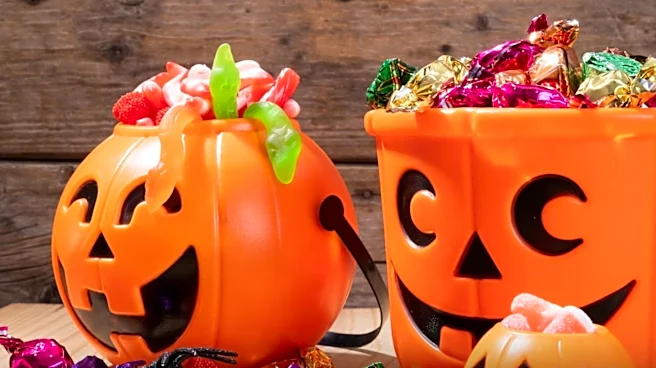
A retrospective on Halloween trick-or-treating highlights the candies and experiences of the 1950s and 1960s. During this era, children would roam neighborhoods independently, collecting a variety of treats that included suckers, penny candy, apples,
small chocolate bars, and Tootsie Rolls. Some lucky trick-or-treaters even received money, typically nickels or occasionally dimes. The article specifically mentions the introduction dates of several iconic candies: M&M’s in 1941, chewy fruity Starburst in the 1960s, and Reese’s Pieces in the 1970s. Other classic candies discussed include Pixy Stix, Bazooka bubble gum (with its Bazooka Joe comic), Flicks, Razzles, and Astro Pops. These candies are remembered for their unique characteristics, such as Pixy Stix's powdered sugar, Bazooka's comic strips, Razzles' candy-to-gum transformation, and Astro Pops' rocket shape.
Why It's Important?
This nostalgic look at Halloween candy and trick-or-treating practices from past decades underscores significant shifts in American culture, consumer habits, and the confectionery industry. The evolution from simple treats like apples and small change to a wider array of branded candies reflects the growth of mass production and marketing in the mid-20th century. For the confectionery industry, the enduring popularity of these classic candies, some of which are still available today, demonstrates the power of brand loyalty and the emotional connection consumers have with childhood favorites. The article also implicitly highlights changes in parenting and community dynamics, as children in the 1950s and 60s enjoyed greater unsupervised freedom during Halloween. This cultural shift impacts how holidays are celebrated today, with increased emphasis on safety and organized events. The continued discussion and remembrance of these candies also contribute to a collective cultural memory, influencing current trends in retro branding and product reintroductions.
What's Next?
The ongoing fascination with nostalgic Halloween candies could lead to several developments in the market and cultural landscape. Confectionery companies might continue to leverage this sentiment by re-releasing limited-edition retro packaging or flavors, or by creating new products that evoke a similar sense of nostalgia. Retailers could capitalize on this by curating 'retro candy' sections, especially around holidays like Halloween. Culturally, there may be a continued trend of intergenerational sharing of these memories, with parents and grandparents introducing classic candies to younger generations, thereby sustaining their legacy. This could also fuel discussions and content creation around the history of American sweets and holiday traditions. Furthermore, the article's mention of specific candies and their origins might inspire renewed interest in the stories behind these brands, potentially leading to documentaries or historical features on the evolution of the candy industry.
Beyond the Headlines
The deep-seated appeal of nostalgic Halloween candy goes beyond simple taste preferences; it taps into a powerful psychological phenomenon known as 'reminiscence bump,' where memories from adolescence and early adulthood are particularly vivid and emotionally charged. For many Americans, these candies are not just sweets but tangible links to their childhood, evoking feelings of innocence, community, and simpler times. This emotional connection can influence consumer behavior, leading individuals to seek out products that offer a sense of comfort and familiarity. The shift from receiving apples and money to exclusively packaged candies also reflects broader societal changes, including increased concerns about food safety and the commercialization of holidays. This evolution highlights how consumer trust, marketing strategies, and cultural norms collectively shape our traditions and consumption patterns. The enduring discussion about these classic treats underscores their role as cultural touchstones, providing a shared language and experience across generations.