


What's Happening?
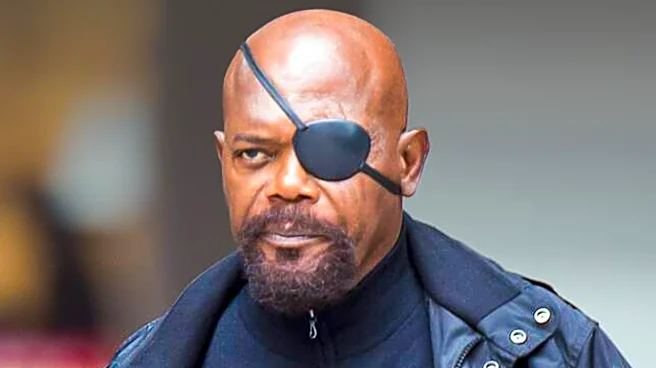
The action thriller film 'The Beast,' directed by Renny Harlin and written by Umair Aleem, features Samuel L. Jackson in the role of Oscar, the U.S. President. The movie, which was released on VOD and digital platforms on November 17 after select theatrical
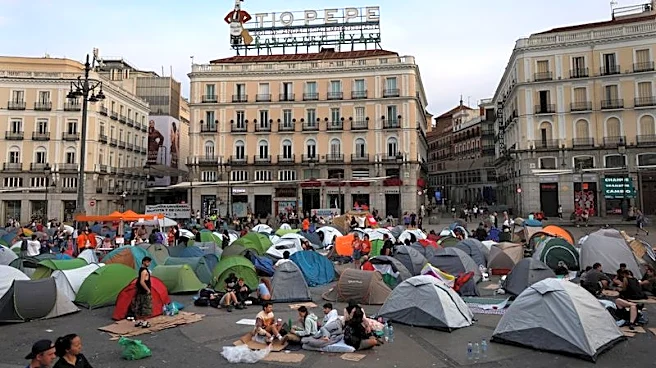
screenings in October, plunges audiences into a violent coup in Madrid, Spain. Terrorists attack world leaders gathered at a summit, forcing President Oscar into 'The Beast,' a heavily armored state car. Only one badly injured Secret Service agent, Taft (Joel Kinnaman), makes it into the vehicle with him. President Oscar is then compelled to drive the advanced car, which is equipped with defensive measures like night-vision and bullet-proof glass, as well as offensive capabilities including machine guns and a railgun. The plot focuses on President Oscar's struggle to reach an extraction point while navigating a city overrun by terrorists and attempting to reconnect with his wife and save Taft.
Why It's Important?
This film is important as it represents a new approach to the action genre, as noted by director Renny Harlin, who aimed to create a unique experience by confining the audience within the armored car while intense action unfolds outside. The movie explores themes of trauma and self-control through President Oscar's character, who is overwhelmed by the events and relives past memories of the Vietnam War. Samuel L. Jackson's performance is highlighted as crucial to elevating the material, bringing emotional weight and theatrical energy to a script that otherwise struggles to merge external conflict with internal struggle. The film's deliberate lack of specificity regarding the antagonists and unresolved plot threads taps into contemporary societal anxieties about unforeseen threats, making it resonate with viewers by reflecting a sense of unease about the future.
What's Next?
As 'The Beast' concludes with unresolved plot threads and unanswered questions, the immediate future for President Oscar and the world within the film's narrative remains open to viewer speculation. The film's ending suggests potential for further exploration of the story, though no sequels or continuations have been announced. The movie's success on VOD and digital platforms will likely influence future decisions regarding similar action thrillers that blend intense external conflict with character-driven internal struggles. The director's innovative approach to the action genre, focusing on a confined perspective, may inspire other filmmakers to experiment with narrative techniques that immerse audiences in unique ways, potentially leading to new trends in action cinema.
Beyond the Headlines
The film's portrayal of a U.S. President directly involved in high-stakes combat, driving 'The Beast' and engaging in defensive and offensive maneuvers, offers a fictionalized yet compelling look at the extreme scenarios leaders might face. This narrative choice, while implausible, allows for an exploration of leadership under duress and the psychological toll of such events. The movie's decision to leave the antagonists unnamed and their affiliations vague, along with an open ending, reflects a broader cultural anxiety about unknown threats and the unpredictability of global events. This ambiguity can be seen as a commentary on the modern geopolitical landscape, where threats are often perceived as diffuse and difficult to pinpoint, contributing to a pervasive sense of low-grade anxiety among the public. The film's success in merging these elements highlights the enduring appeal of action thrillers that resonate with contemporary societal concerns.