
What's Happening?
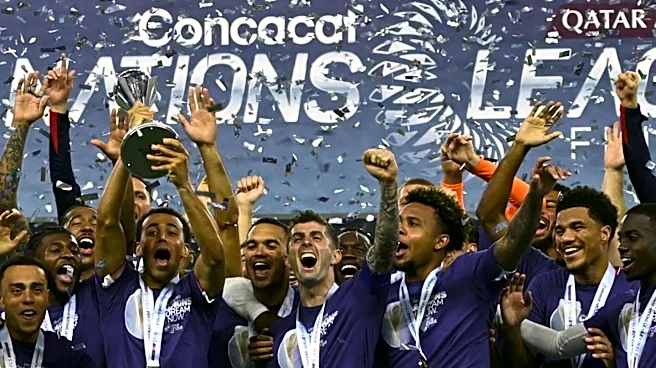
UEFA and CONCACAF are engaged in discussions to establish a combined Nations League competition, potentially launching in the fall of 2028. These talks are reportedly driven by a mutual interest in creating
a new format that benefits both confederations, with UEFA aiming to expand its reach into the North American sports market. The proposed league would involve top European teams competing against leading CONCACAF nations. This initiative is also seen as a strategic move to exert pressure on FIFA President Gianni Infantino, with both UEFA President Aleksander Ceferin and CONCACAF President Victor Montagliani reportedly believing Infantino should resign. The discussions come amidst controversy surrounding Infantino's plans for private investment in FIFA events. The Asian Football Confederation (AFC) is also believed to be involved in these talks, with a view to joining at a later stage. The new tournament is designed to fit within the existing international football calendar, with the league phase in autumn and finals in March and June.
Why It's Important?
This potential collaboration between UEFA and CONCACAF signifies a significant shift in the global football landscape, challenging FIFA's traditional dominance in international competition structuring. For the U.S. and North American football, an expanded Nations League would provide unprecedented opportunities for CONCACAF teams to regularly compete against elite European national teams. This increased exposure and higher level of competition could significantly elevate the quality and profile of football in the region, potentially boosting fan engagement, commercial interest, and player development. From a political standpoint, the move represents a direct challenge to FIFA President Gianni Infantino, indicating a growing dissatisfaction among powerful confederations with his leadership and policies. If successful, this expanded league could reshape the future of international football tournaments, potentially leading to a more decentralized power structure within the sport and offering new avenues for revenue generation and competitive development outside of FIFA's direct control.
What's Next?
The discussions between UEFA and CONCACAF are ongoing, with the potential for the expanded Nations League to commence as early as the 2028-29 season. FIFA President Gianni Infantino is expected to attend a youth football event in the Dominican Republic, which could provide an opportunity for him to engage with CONCACAF's Caribbean nations and attempt to shore up support amidst the ongoing tensions. This meeting could also bring him face-to-face with CONCACAF President Victor Montagliani, who is seen by some as a potential challenger for the FIFA presidency. The involvement of the Asian Football Confederation (AFC) suggests a broader movement towards inter-confederation cooperation, which could lead to further expansions or new competitions in the future. The outcome of these talks will likely influence the political dynamics within global football and could set a precedent for how major confederations collaborate on international tournaments, potentially impacting FIFA's role and authority.
Beyond the Headlines
The proposed UEFA-CONCACAF Nations League extends beyond mere sporting competition; it represents a strategic power play in the intricate world of international football governance. The explicit desire by UEFA and CONCACAF presidents for FIFA President Infantino's resignation highlights deep-seated disagreements over the sport's direction and commercialization, particularly concerning FIFA's plans for private investment in its events. This initiative could lead to a more fragmented international football calendar, where confederations exert greater autonomy and potentially create alternative structures that bypass FIFA. Such a development could have long-term implications for the global distribution of football revenues, the scheduling of international matches, and the overall influence of FIFA as the sport's ultimate governing body. It also raises questions about player welfare and the potential for increased fixture congestion if new competitions are added without careful coordination across all stakeholders.