





What's Happening?
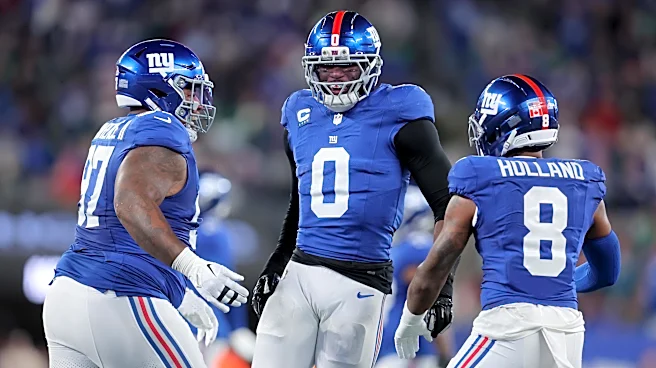
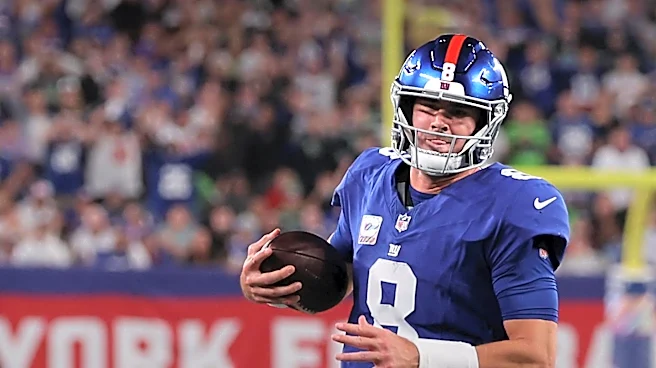
John Harbaugh, in a recent interview, commended the New York Giants players for their adept handling of the Dart-Carter situation. Harbaugh emphasized the importance of open dialogue and mutual respect when dealing with political and social issues. He
noted that the players themselves took the initiative to establish ground rules for addressing such matters, which he believes will better prepare them for future challenges. Harbaugh's comments highlight the team's proactive approach to navigating complex social dynamics, suggesting a culture of self-regulation and preparedness within the Giants' locker room.
Why It's Important?
The way the New York Giants have managed the Dart-Carter situation is significant as it reflects a broader trend in professional sports where athletes are increasingly engaging with social and political issues. This proactive stance by the Giants players could set a precedent for other teams, encouraging them to foster environments where players feel empowered to address and discuss societal challenges. Such developments can influence public perception of sports teams as socially responsible entities, potentially impacting fan engagement and sponsorship opportunities. Moreover, it underscores the evolving role of athletes as influential voices in societal discourse.
What's Next?
As the Giants continue to navigate the complexities of social and political discourse, it is likely that they will face additional challenges that test their established protocols. The team's approach could inspire similar strategies across the league, prompting discussions on how sports organizations can support players in these endeavors. Stakeholders, including team management and the NFL, may need to consider formalizing support systems and resources to aid players in these discussions, ensuring that they are equipped to handle such situations effectively.
Beyond the Headlines
The Giants' handling of the Dart-Carter situation may have deeper implications for the culture within the NFL. It highlights the potential for sports teams to act as microcosms of society, where issues of race, politics, and social justice are actively discussed and addressed. This could lead to a shift in how teams are perceived, not just as athletic organizations but as platforms for social change. The emphasis on player-led initiatives also raises questions about the role of leadership in sports, suggesting a move towards more democratic and inclusive team environments.