





What's Happening?
The Montes de Málaga Natural Park is home to traditional roadside taverns, known as 'ventas,' which continue to serve rustic Andalusian comfort food. These establishments, originally stopovers for muleteers, now attract locals and travelers seeking hearty
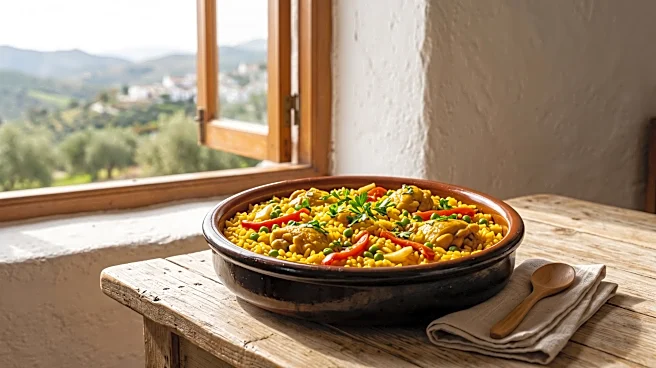
dishes, local wine, and scenic views. The culinary ritual centers around the 'Plato de los Montes,' a substantial combination plate designed to sustain laborers through harsh winters. This dish typically includes crispy fried potatoes, sunny-side-up fried eggs, roasted green peppers, pork loin slow-cooked in paprika-infused red lard (Lomo en Manteca), and lightly seared chorizo. Beyond this signature dish, ventas offer other traditional delicacies such as migas (fried breadcrumbs with cured meats), cazuela de arroz (slow-cooked rice dishes with wild rabbit or chicken), and Vino de los Montes, a local sweet wine. Notable ventas like Venta El Túnel and Venta Galwey are celebrated for their quality and preservation of authentic regional gastronomy, as highlighted by guides like Info Tour Málaga and regional features in The Olive Press.
Why It's Important?
The continued operation and popularity of these traditional ventas are important for preserving the cultural and culinary heritage of the Montes de Málaga region. In an era of increasing globalization and standardized dining experiences, these establishments offer a unique and authentic taste of Andalusian history and local traditions. They provide a significant economic boost to the rural areas of the natural park, attracting tourism and supporting local producers of ingredients like wild game, wine, and cured meats. For visitors, these ventas offer a distinct experience that contrasts with the coastal tourist offerings, providing a deeper connection to the region's countryside and its historical way of life. The emphasis on hearty, traditional meals also reflects a sustainable approach to food, utilizing local resources and time-honored cooking methods, which can serve as a model for culinary tourism focused on authenticity and regional identity.
What's Next?
The future of these ventas will likely involve a continued balance between preserving tradition and adapting to modern demands. They are expected to remain popular destinations, especially on weekends, and may see increased interest from culinary tourists seeking authentic experiences. Efforts to promote these establishments through local tourism boards and culinary guides will likely continue, potentially leading to more visitors. There may also be a focus on enhancing the visitor experience while maintaining the rustic charm, possibly through improved accessibility or expanded offerings that still align with their traditional roots. The challenge will be to manage increased popularity without compromising the unique character and quality that define these historic roadside taverns, ensuring they remain true to their heritage while accommodating a growing audience.
Beyond the Headlines
The enduring appeal of the ventas in Montes de Málaga speaks to a broader human desire for authenticity and connection to the past, particularly through food. In a fast-paced world, these establishments offer a sanctuary where time seems to slow down, fostering a sense of community and shared experience around simple, honest hospitality. This phenomenon highlights the cultural significance of food as a vehicle for storytelling and identity, where each dish carries generations of history and tradition. The act of dining at a venta is not just about sustenance; it's a cultural immersion that allows individuals to partake in a living heritage. This trend of seeking out authentic, traditional culinary experiences is a counter-narrative to the homogenizing effects of modern consumer culture, emphasizing the value of local distinctiveness and the emotional resonance of food prepared with care and tradition.