






What's Happening?
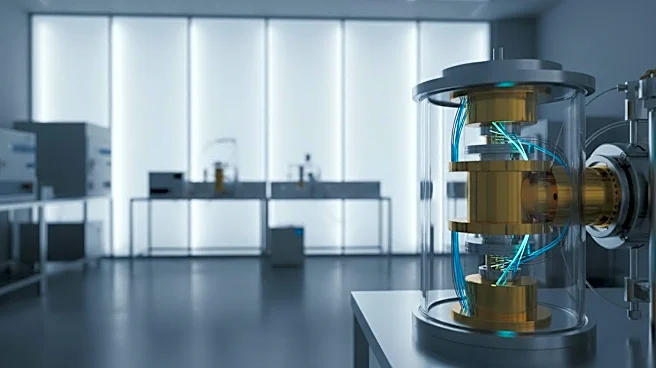
IBM has unveiled new, smaller, rectangular, and modular cryogenic cabinets designed to enhance the scalability of quantum computers. These cabinets are significantly larger than a domestic fridge, made from solid aluminum, and offer approximately 0.53
square meters of wiring area and 2.75 cubic meters of vacuum chamber volume. This design provides ample space for larger single processors and denser system configurations. Crucially, these new units address a major challenge in quantum computing: the need for extremely low temperatures to prevent glitches and maintain fault tolerance. The cabinets feature openings for 'quantum cables' protected by multiple layers of thermal shielding, forming 'cryogenic tunnels' that ensure short, clean connections between processors. This innovation aims to mitigate noise interference, which can destroy a qubit's superposition and compromise calculations, a problem prevalent with IBM's previous cylindrical coolers that required longer, noisier connections.
Why It's Important?
This development is critical for the advancement of quantum computing, particularly in the U.S. technology sector. The ability to scale quantum computers more effectively means that these powerful machines can move closer to practical applications. By enabling the connection of multiple quantum processors, IBM is addressing the current limitations of packing qubits into a single chip, paving the way for more complex computations. This modular approach could make quantum hardware less exotic and more cost-effective to acquire and operate in the future. For industries reliant on advanced computation, such as finance, healthcare, and scientific research, improved quantum computing capabilities could lead to breakthroughs in areas like drug discovery, materials science, and complex data analysis. The reduction of noise interference through better cooling and cabling is fundamental to achieving reliable and accurate quantum calculations, which is essential for the technology's broader adoption and impact.
What's Next?
IBM anticipates that these new modular cryogenic cabinets will allow for the construction of larger and more powerful quantum computers. The company plans to reuse this design for future generations of quantum hardware, suggesting a standardized approach to scaling. This modularity will enable the connection of multiple quantum processors, allowing them to work on different parts of a single job, thereby increasing computational capacity. The focus on shorter, cleaner connections and improved thermal shielding indicates a continued effort to enhance fault tolerance and reduce noise, which are key challenges in quantum computing. As this technology matures, it could lead to more accessible and efficient quantum computing resources, potentially accelerating research and development across various scientific and industrial fields. The long-term goal is to make quantum computers a more viable and impactful tool for solving complex problems that are currently beyond the reach of classical supercomputers.
Beyond the Headlines
The introduction of these modular cryogenic cabinets signifies a deeper shift in the approach to quantum computer engineering, moving towards industrial-scale deployment rather than purely experimental setups. This modularity mirrors the evolution of classical data centers, where standardized racks and efficient cabling are crucial for performance and space utilization. The emphasis on reducing 'noise' in quantum systems highlights a fundamental challenge in harnessing quantum mechanics for computation; maintaining the delicate quantum states of qubits requires extreme precision and environmental control. This innovation could also foster a more competitive landscape in quantum computing, as other companies may adopt similar modular strategies to scale their own systems. Ultimately, this development contributes to the broader societal impact of quantum technology, potentially leading to advancements that could redefine computing capabilities and solve some of the world's most complex scientific and technological challenges, moving beyond the initial 'hype' to tangible progress.