







What's Happening?
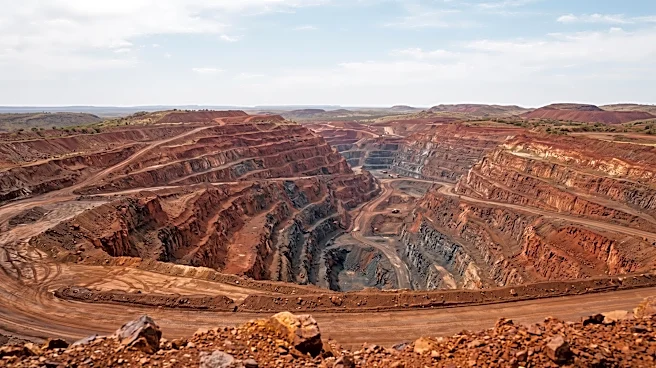
Diversified mining company BHP Group is implementing 300 job cuts across its iron-ore operations in Western Australia. The reductions will affect its South Flank, Mining Area C, Newman, and Jimblebar mines in the Pilbara region, which collectively employ
approximately 16,000 workers. This decision comes as the company faces a significant decline in iron-ore prices, which have fallen by about 14% since the beginning of the year. Concurrently, the costs associated with mining and shipping the raw material have increased, partly due to surging fuel prices. BHP's full-year financial report in August highlighted a material shift in the cost environment, attributing it to the conflict in the Middle East and its ripple effects on energy prices and supply chains. The company stated it would explore other employment opportunities for the affected individuals.
Why It's Important?
This development underscores the volatility and cost pressures impacting the global mining industry, particularly for major commodities like iron ore. For the U.S. economy, fluctuations in iron-ore prices and production costs can indirectly affect industries reliant on steel, such as manufacturing, construction, and automotive. Higher raw material costs for steel producers could translate into increased prices for finished goods, potentially contributing to inflationary pressures. The job cuts at BHP, a major global miner, reflect a broader trend where companies are optimizing operations in response to market conditions, which could influence investment decisions and supply chain stability worldwide. The situation also highlights the interconnectedness of global events, as geopolitical conflicts can directly impact commodity markets and operational expenses for international corporations.
What's Next?
BHP will continue to assess its operational efficiency and cost structures in response to ongoing market dynamics. The company's efforts to find alternative employment for the affected workers will be a key focus. The broader mining sector will likely monitor iron-ore price trends and fuel costs closely, as these factors could influence future production levels and employment decisions across the industry. Rival companies, such as Rio Tinto, which has also noted increased operating costs due to elevated diesel prices, may implement similar measures if market conditions persist or worsen. The industry will also be watching for any stabilization in global energy markets, which could alleviate some of the cost pressures currently impacting mining operations.
Beyond the Headlines
The job cuts at BHP highlight the delicate balance between global commodity demand, operational costs, and geopolitical stability. Beyond the immediate economic impact, such decisions can have significant social consequences for mining communities, affecting local economies and livelihoods. The emphasis on optimizing operations in response to market shifts also points to a long-term trend of increased automation and efficiency drives within the mining sector, potentially leading to structural changes in the workforce. Furthermore, the mention of the conflict in the Middle East as a contributing factor underscores how seemingly distant geopolitical events can have tangible, direct impacts on global supply chains and the cost of essential raw materials, influencing everything from industrial production to consumer prices.