




What's Happening?
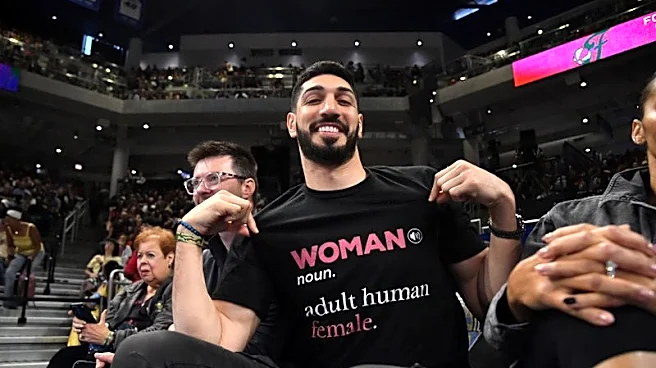
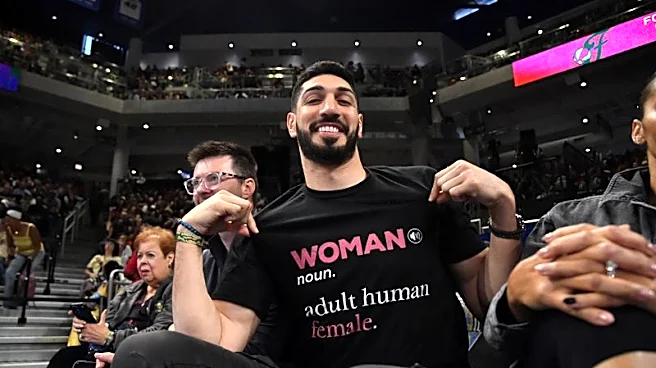
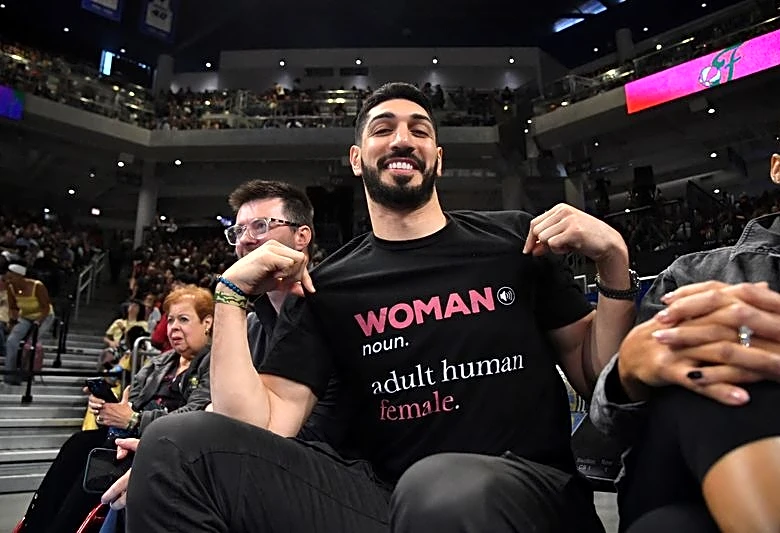
Former NBA player Enes Kanter Freedom was ejected from a WNBA game in Chicago after a verbal altercation with Chicago Sky point guard Natasha Cloud. Kanter Freedom, who was sitting courtside wearing a T-shirt that read 'WOMAN noun. adult human female,'
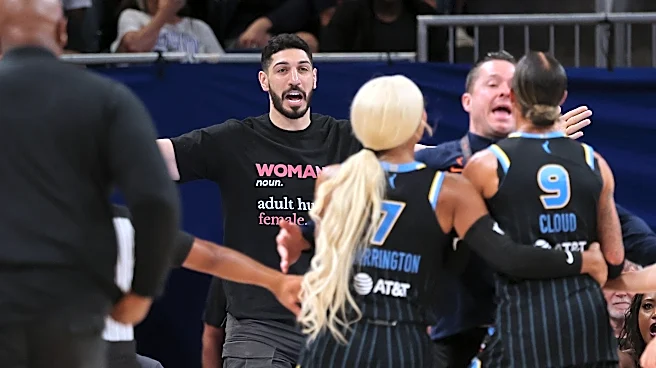
was reportedly making comments towards Cloud throughout the game. During a timeout in the third quarter, Cloud approached Kanter Freedom, leading to a heated exchange. Security intervened, directing Kanter Freedom to leave the arena. Following the incident, Kanter Freedom posted on social media, stating he was 'kicked out of a @WNBA game for supporting WOMEN!' This event follows his increased involvement in political discussions, particularly regarding transgender athletes, a topic that has been part of a national debate sparked by comments from Fever guard Sophie Cunningham.
Why It's Important?
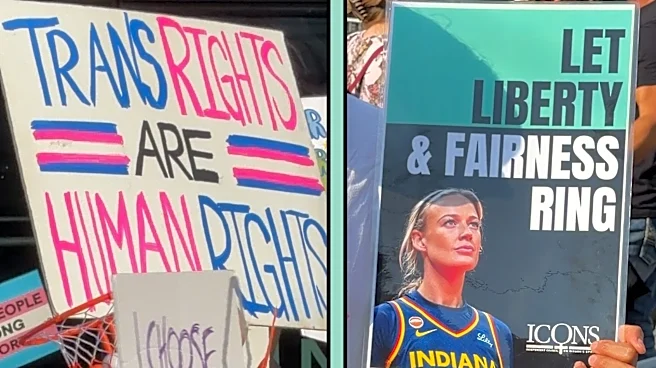
This incident highlights the ongoing tension and public discourse surrounding gender identity and sports, particularly in professional women's leagues. Kanter Freedom's public stance and the confrontation with a WNBA player bring these debates directly into the sports arena, potentially influencing fan perception and athlete engagement on social issues. The WNBA's collective bargaining agreement specifies that 'only players who are women are eligible to play in the WNBA,' but lacks a detailed definition of 'woman' or a public policy on transgender or intersex athletes. This lack of explicit policy could lead to further discussions and potential challenges regarding eligibility in the future, impacting the league's stance and potentially setting precedents for other sports organizations. The event also underscores the increasing intersection of sports, politics, and social activism.
What's Next?
While the WNBA has not announced any plans to ban Enes Kanter Freedom from future games, sources indicate he is not eligible to play in the women's league, nor is fellow former NBA player Royce White, who also declared himself eligible. The league currently has no instances requiring a review of eligibility distinctions for transgender or intersex athletes and will continue to research and review the topic without immediate expectations of rule alterations. However, the public nature of this altercation and Kanter Freedom's continued vocal activism suggest that similar incidents or discussions may arise. The WNBA may face increasing pressure to clarify its policies regarding athlete eligibility and conduct at games, especially as the debate around gender in sports continues to evolve. Future games involving players or individuals with strong public stances on these issues could see heightened scrutiny and potential for further confrontations.
Beyond the Headlines
The incident transcends a simple ejection from a sporting event, touching upon broader societal discussions about gender, identity, and free speech in public spaces. Kanter Freedom's choice of attire and his public statements reflect a specific viewpoint in the ongoing debate about what constitutes 'womanhood' and who should participate in women's sports. This event could further polarize opinions among sports fans and the general public, potentially influencing how sports organizations navigate complex social issues. It also raises questions about the role of athletes and public figures in advocating for their beliefs, and the boundaries of such advocacy within professional sports environments. The WNBA, like other sports leagues, is increasingly becoming a platform for social commentary, and incidents like this highlight the challenges of balancing diverse viewpoints with maintaining a respectful and inclusive environment for all participants and fans.