




What's Happening?
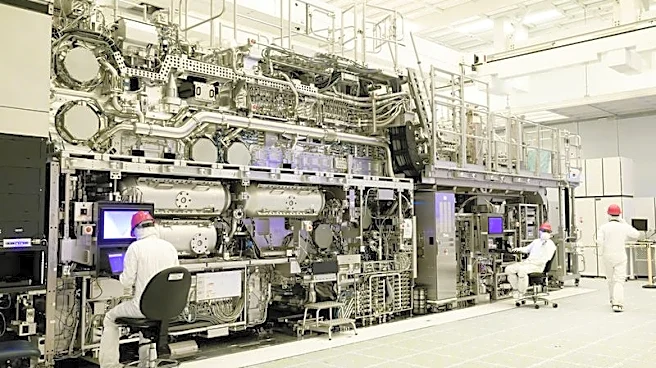
China has reportedly begun manufacturing immersion deep ultraviolet (DUV) lithography machines, a critical tool in semiconductor production, challenging the monopoly held by Dutch company ASML. These machines are expected to be delivered to major Chinese
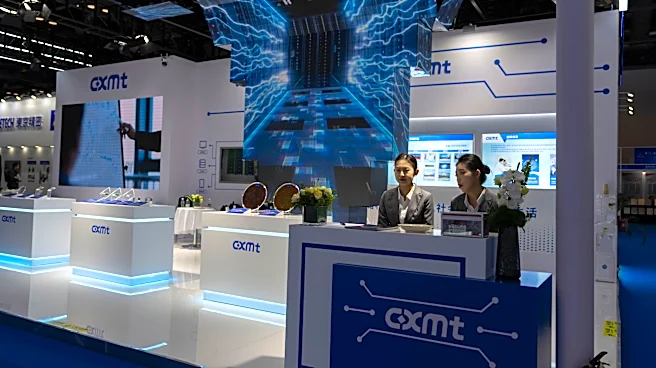
chip manufacturers, including Semiconductor Manufacturing International Corp. and Changxin Memory Technologies (CXMT). The news has sparked concerns among investors about the potential impact on ASML's market share, leading to a decline in ASML's stock. While China's advancements in DUV technology are significant, analysts suggest that the country's ability to scale production and achieve performance parity with ASML remains uncertain. The development of these machines could reduce China's reliance on Western semiconductor equipment, posing a challenge to U.S. and European firms.
Why It's Important?
China's progress in developing DUV lithography machines represents a strategic move to enhance its domestic semiconductor capabilities and reduce dependence on foreign technology. This development could have far-reaching implications for the global semiconductor industry, potentially altering competitive dynamics and market shares. For ASML, which dominates the DUV and EUV lithography markets, China's entry could pose a threat to its business, particularly in the Chinese market. The situation underscores the broader geopolitical tensions between the U.S. and China, as both nations vie for technological supremacy. The outcome of this competition could influence global supply chains, investment strategies, and technological innovation in the semiconductor sector.
What's Next?
The semiconductor industry will likely continue to monitor China's advancements in DUV technology closely. ASML and other Western firms may need to adapt their strategies to maintain their competitive positions. Policymakers in the U.S. and Europe might consider measures to support their domestic semiconductor industries and address potential market disruptions. Additionally, the global tech industry could see increased collaboration or competition as companies navigate the evolving landscape. The outcome of these dynamics will depend on how effectively U.S. firms and policymakers respond to the challenges posed by China's advancements in semiconductor technologies.