





What's Happening?
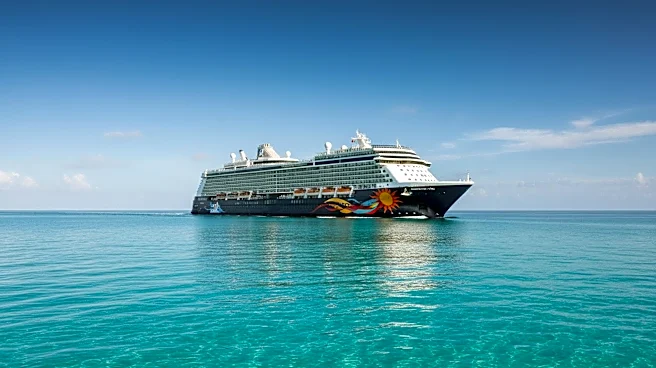
The Norwegian Dawn cruise ship received an unsatisfactory sanitation score of 84 during a March inspection by the Centers for Disease Control and Prevention (CDC). This score falls below the CDC's passing threshold of 86. The CDC's Vessel Sanitation Program
(VSP) conducts unannounced inspections of cruise ships in U.S. ports to ensure compliance with federal public health standards. These inspections grade ships on a 100-point scale, with anything 85 or below considered unsatisfactory. Other vessels, including Carnival Breeze, Kydon, National Geographic Sea Lion, Sun Princess, MSC Meraviglia, and Amadea, also had their scores revealed, with some, like Carnival Breeze, showing fluctuations from perfect scores to lower ones in subsequent inspections. The scores reflect conditions at the time of inspection and can change. Norwegian Cruise Line reportedly issued a detailed report to the CDC five days after the inspection, outlining corrective measures taken.
Why It's Important?
The CDC's Vessel Sanitation Program is crucial for protecting the health of travelers, staff, and the locations visited by cruise ships. Cruise ships are shared environments where thousands of people interact with the same surfaces daily, making strong cleaning and hygiene practices essential to prevent the rapid spread of germs and reduce the risk of illness outbreaks. While a lower sanitation score doesn't automatically guarantee an illness outbreak, it highlights potential vulnerabilities in a ship's public health measures. The transparency provided by these inspections allows the public to make informed decisions about their travel, and it pressures cruise lines to maintain high sanitation standards. The program's focus on medical facilities, water systems, dining areas, and cabins directly impacts passenger safety and well-being, underscoring the importance of these unannounced checks.
What's Next?
Following the unsatisfactory score, Norwegian Cruise Line has already submitted a report to the CDC detailing corrective actions taken on the Norwegian Dawn. The CDC's Vessel Sanitation Program typically conducts two unannounced inspections per year for participating ships. Therefore, the Norwegian Dawn can expect another unannounced inspection in the future to assess its continued compliance with public health standards. The cruise industry as a whole will likely continue to face scrutiny regarding sanitation and illness prevention, especially given the high volume of passengers on board. Cruise lines will need to demonstrate ongoing commitment to robust cleaning and hygiene protocols to maintain public trust and ensure passenger safety, with future inspection scores serving as key indicators of their efforts.
Beyond the Headlines
The CDC's Vessel Sanitation Program, established in 1975, plays a vital role in public health beyond just preventing illness on ships. It sets a benchmark for hygiene in a unique, contained environment that can easily become a vector for disease transmission across international borders. The program's existence and its rigorous inspection process highlight the complex interplay between public health, international travel, and the economic interests of the cruise industry. The public availability of these scores also empowers consumers, shifting some of the responsibility for health and safety awareness to travelers themselves. This ongoing oversight underscores the ethical obligation of cruise lines to prioritize passenger well-being, not just as a matter of compliance, but as a fundamental aspect of their service.