
What's Happening?
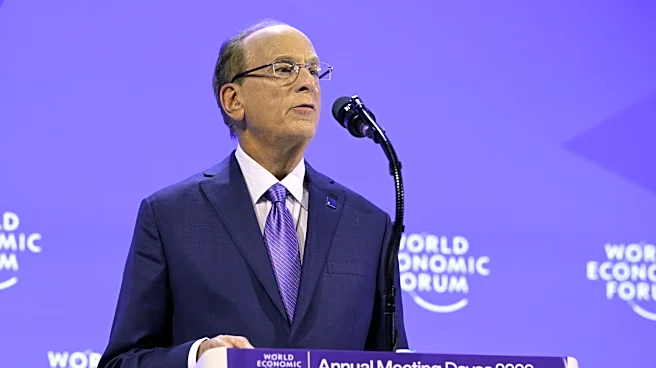
Larry Fink, the co-founder and CEO of BlackRock, has been highlighted as a prominent alumnus of UCLA. Fink earned both his undergraduate degree in political science and his MBA from UCLA's Anderson School
of Management. In 1988, he co-founded BlackRock, transforming it from a specialized bond-focused firm into the world's largest asset manager. Under his leadership, BlackRock now oversees approximately $10 trillion in assets, a sum that surpasses the Gross Domestic Product of most nations. Fink has maintained his role as CEO for decades, establishing himself as a significant voice in discussions concerning corporate governance, climate investing, and the future trajectory of capitalism. His career exemplifies the success of UCLA alumni in founding influential global businesses.
Why It's Important?
Larry Fink's enduring leadership at BlackRock holds significant importance for global finance and the U.S. economy. As the head of the world's largest asset manager, his decisions and perspectives on investment strategies, particularly in areas like climate investing, can influence trillions of dollars in capital allocation. This impacts various U.S. industries, from energy to technology, as companies adapt to evolving investment criteria. Fink's advocacy for corporate governance standards also shapes how publicly traded companies operate, potentially affecting shareholder value and corporate responsibility. His influence extends to public policy discussions, as his views on capitalism and environmental, social, and governance (ESG) factors often resonate with policymakers and business leaders, guiding future regulatory frameworks and market trends. Stakeholders across the financial sector, corporations, and even environmental groups closely monitor his pronouncements.
What's Next?
As Larry Fink continues to lead BlackRock, his ongoing influence is expected to shape future trends in investment and corporate strategy. BlackRock's continued focus on climate investing and ESG principles suggests that more companies will face pressure to adopt sustainable practices to attract capital. This could lead to further shifts in energy production, supply chain management, and corporate reporting standards across U.S. industries. Fink's role as an influential voice in corporate governance indicates that discussions around board diversity, executive compensation, and shareholder rights will remain prominent. Future policy debates regarding financial regulation and climate initiatives may also continue to be informed by BlackRock's positions, potentially influencing legislative actions and market behavior in the coming years.
Beyond the Headlines
Larry Fink's long-standing tenure and influence at BlackRock extend beyond mere financial management, touching upon deeper ethical and cultural dimensions of modern capitalism. His emphasis on climate investing and corporate social responsibility has propelled ESG factors into mainstream financial discourse, challenging traditional notions of profit maximization as the sole corporate objective. This shift raises ethical questions about the role of financial institutions in addressing societal challenges like climate change and social inequality. Culturally, Fink's advocacy reflects a broader societal expectation for corporations to act as responsible global citizens, potentially leading to long-term shifts in consumer behavior and corporate branding. The integration of ESG into investment decisions also presents legal implications, as companies navigate new disclosure requirements and potential liabilities related to environmental and social impacts, signaling a more interconnected future for finance, ethics, and law.