

What's Happening?
During the 2024 presidential campaign, Vice President Kamala Harris suggested that companies were 'gouging' customers, a claim that was met with skepticism from some prominent economists, including Lawrence Summers and Jason Furman. They mocked the idea
that companies were profiteering during a crisis. However, new research, including a September 2026 working paper by Northeastern University economists John Kwoka and Muhammad Shabanpour, titled 'Inflation as a Pretext for Raising Prices: A Test of State-Dependent Cost Pass-Through,' provides evidence supporting the notion of corporate profiteering. This study found that airlines increased fares significantly more in high-inflation periods in response to fuel cost increases compared to low-inflation periods. Additionally, analysis of Census Bureau data across 26 manufacturing and trade industries from 2000 to mid-2026 indicates that operating margins rose during the recent inflation period, suggesting companies raised prices beyond their increased costs.
Why It's Important?
The debate over corporate profiteering during inflation has significant implications for U.S. economic policy and consumer welfare. If companies are indeed using inflation as a 'cover' to widen profit margins, it suggests that current market structures and regulatory frameworks may be insufficient to protect consumers from excessive price increases. The findings from the airline and grocery industries, where profits more than doubled in some cases, highlight a potential systemic issue. This research challenges the traditional economic view that price increases are solely a function of rising costs and demand. For policymakers, this evidence could justify interventions such as national bans on price gouging, stricter antitrust enforcement, and regulations against certain pricing algorithms, aiming to curb inflationary pressures and ensure fairer market practices for American consumers.
What's Next?
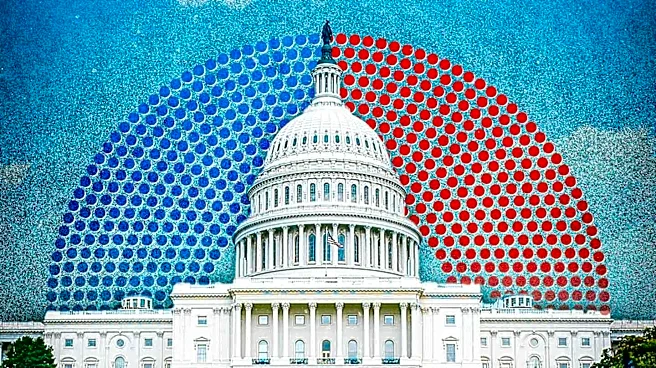
The emerging evidence of corporate profiteering is likely to intensify the debate among economists and policymakers regarding the causes and solutions for inflation. The new Democratic-controlled Congress may consider legislative actions, including a national ban on price gouging during crises, as well as other anti-inflationary tools such as banning common pricing algorithms and expanding the FTC's authority. Further research will likely continue to explore the extent of profiteering across various sectors and its impact on different economic groups. The findings could also influence public perception of corporate responsibility and market fairness, potentially leading to increased consumer advocacy and demands for greater transparency in pricing. The long-term outcome could be a shift in regulatory approaches to inflation, moving towards more direct interventions to control corporate pricing power.
Beyond the Headlines
The discussion around corporate profiteering during inflation delves into fundamental questions about market power, economic ethics, and the social contract between businesses and consumers. The idea that companies exploit inflationary environments to increase profits raises ethical concerns about fairness and equity, especially when real wages for workers are falling. This situation can erode public trust in market mechanisms and corporate behavior, potentially fueling populist sentiments and demands for more government intervention in the economy. The debate also highlights the limitations of traditional economic models in explaining complex market dynamics, particularly the role of information asymmetry and market concentration. Culturally, it challenges the narrative of businesses as purely efficient entities, suggesting a need for greater accountability and a re-evaluation of the balance between profit motives and societal well-being.