







What's Happening?
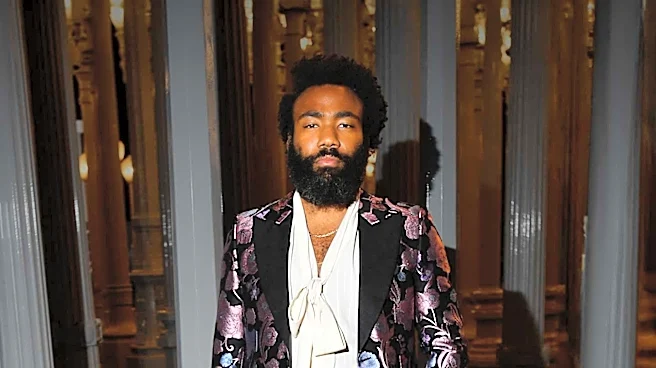
Donald Glover, known by his musical alter ego Childish Gambino, is highlighted as a significant inspiration for Hussein Al Attar, a versatile designer formerly with BMW. Al Attar, who recently concluded a 14-year tenure at BMW, expressed admiration for Glover's
diverse talents across acting, music, comedy, writing, and filmmaking. Glover's ability to excel in multiple creative fields, such as his critically acclaimed music video and song "This is America" (released in 2018), and his television series 'Atlanta,' resonates with Al Attar's own multidisciplinary approach to car design. Al Attar, who designed various BMW models including the M2, 6 Series Gran Turismo, and X6, views cars as 'movable art' and 'mobile architecture,' drawing inspiration from beyond the traditional automotive realm. He believes the future of creative work lies in being a generalist rather than a hyper-specialized expert, a philosophy he sees embodied in Glover's career.
Why It's Important?
This perspective from a prominent automotive designer underscores a growing trend in creative industries: the value of multidisciplinary thinking. For U.S. industries, particularly those reliant on innovation and design, Al Attar's admiration for Glover suggests a shift towards valuing broader skill sets and diverse inspirations. This could influence hiring practices and educational programs, encouraging a more holistic approach to creative development. The emphasis on 'generalist' over 'specialist' could lead to more dynamic and adaptable workforces, capable of cross-pollinating ideas from various fields. For consumers, this might translate into products and experiences that are more thoughtfully designed and integrated, reflecting a wider range of cultural and artistic influences. The recognition of artists like Donald Glover as role models in seemingly unrelated fields like automotive design highlights the interconnectedness of creative thought and its potential to drive innovation across sectors.
What's Next?
The departure of Hussein Al Attar from BMW to another automaker, driven by his pursuit of diverse creative challenges, signals a potential shift in how top design talent is cultivated and retained within the automotive industry. Other companies may increasingly seek designers who demonstrate a broad range of interests and inspirations, moving away from a purely specialized focus. This could lead to more collaborative projects between different creative sectors, such as automotive design studios partnering with film directors, musicians, or fashion designers to infuse new perspectives into their products. Educational institutions might also adapt their curricula to foster more interdisciplinary studies, preparing future designers and innovators for a landscape that values versatility. The continued success of figures like Donald Glover will likely further solidify the idea that diverse creative pursuits can lead to profound and impactful contributions across various industries.
Beyond the Headlines
The inspiration drawn from Donald Glover by a designer like Hussein Al Attar points to a deeper cultural shift where the boundaries between artistic disciplines are becoming increasingly fluid. This challenges traditional notions of expertise and specialization, suggesting that true innovation often emerges from the synthesis of disparate ideas and skills. Ethically, this approach encourages a more inclusive view of creativity, recognizing that valuable insights can come from unexpected sources. It also highlights the importance of cultural figures who defy categorization, serving as catalysts for new ways of thinking across different professional domains. This trend could foster a more dynamic and interconnected creative economy in the U.S., where cross-pollination of ideas leads to richer, more meaningful, and more resonant products and experiences for society.