

What's Happening?
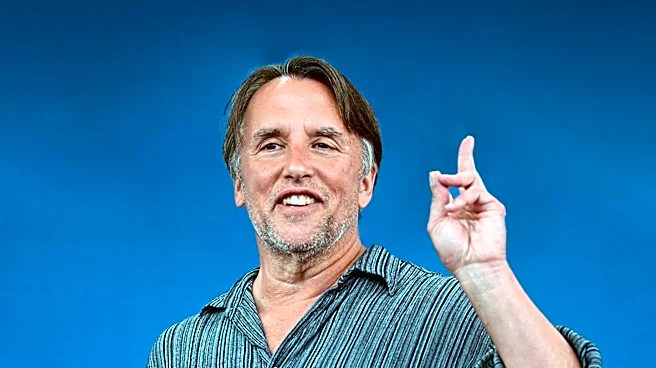
Filmmaker Richard Linklater recently addressed claims made by actress Julie Delpy regarding a pay disparity between her and co-star Ethan Hawke for their work on the 'Before' trilogy. During a discussion at the Zurich Film Festival, Linklater was asked
about an interview where Delpy stated she was paid 'only a third' of what Hawke received. Linklater refuted this, clarifying that while Delpy's pay was 'a little less' than Hawke's, it was not by 'much.' He explained that he actively advocated for Delpy's compensation, pushing back against producers who initially argued for a lower salary due to her limited American credits. Linklater emphasized that he fought to bring their salaries closer, acknowledging the significant effort both actors invested in the films. This discussion occurred as Linklater received a career achievement award and provided an update on his ambitious 'Merrily We Roll Along' project, which is being filmed over a 20-year period.
Why It's Important?
This clarification from Richard Linklater is important as it sheds light on ongoing discussions within the entertainment industry regarding gender pay equity. While Linklater disputes the extent of the disparity claimed by Delpy, his comments acknowledge that a gap existed, albeit a smaller one than initially suggested. This situation highlights the historical challenges actresses, particularly those without extensive U.S. credits, have faced in negotiating equitable compensation compared to their male counterparts. Linklater's role in advocating for Delpy's pay underscores the influence directors can have in addressing such issues. The 'Before' trilogy is critically acclaimed and beloved, making any discussion about its production, including actor compensation, relevant to understanding the broader dynamics of Hollywood and the persistent efforts required to achieve fair pay practices.
What's Next?
While Linklater has offered his perspective, it remains to be seen if Julie Delpy will issue a further statement or clarification in response to his comments. The broader conversation about pay equity in Hollywood is likely to continue, with industry figures and advocacy groups pushing for greater transparency and fairness in compensation. This incident may prompt further scrutiny of past film productions and encourage more proactive measures to ensure equitable pay for all actors, regardless of gender or international recognition. The ongoing production of Linklater's 'Merrily We Roll Along' will also continue to draw attention, particularly given its unique 20-year filming schedule, which presents its own set of logistical and financial considerations for cast and crew.
Beyond the Headlines
Beyond the immediate discussion of pay, this exchange touches upon the complex interplay of artistic vision, financial realities, and gender dynamics in filmmaking. Linklater's account reveals the behind-the-scenes negotiations that often occur, where a director might champion an actor's value against producer-driven financial constraints. It also highlights the subjective nature of 'value' in the industry, where factors like 'American credits' can disproportionately affect an actor's earning potential. This situation contributes to the larger cultural dialogue about how talent is valued and compensated, particularly for women in creative fields. The 'Before' trilogy's enduring legacy also means that these discussions become part of its historical context, influencing how future generations perceive the film and the industry practices of its time.