




What's Happening?
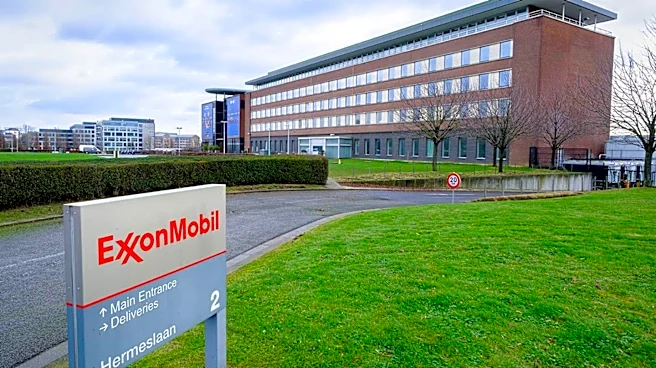
Exxon Mobil CEO Darren Woods has announced the company's intention to maintain its annual share buyback program at $20 billion through 2027. This decision comes as major integrated oil companies, including Exxon Mobil and Chevron, are adopting different
strategies compared to independent shale producers. While independent producers are returning increased cash flow directly to shareholders through dividends and buybacks, major integrated companies are focusing on debt reduction. In the third quarter, Exxon Mobil and Chevron reported shareholder returns of $9.4 billion and nearly $6 billion, respectively. This approach by Exxon Mobil highlights a commitment to consistent shareholder returns over several years, contrasting with the more flexible, cash-flow-dependent returns seen from independent shale companies. The broader context is a volatile oil market, where Brent Crude prices have surged over 50% this year, yet U.S. shale producers are largely avoiding significant production expansion.
Why It's Important?
This announcement from Exxon Mobil is significant for several reasons. Firstly, it signals a long-term commitment to shareholder returns, which can influence investor confidence and stock performance. For investors, a predictable and substantial buyback program offers a clear return on investment, potentially making Exxon Mobil an attractive option in a volatile energy market. Secondly, it highlights a strategic divergence within the U.S. oil industry. Major players like Exxon Mobil are prioritizing financial stability and consistent capital allocation, while independent shale producers are more reactive to short-term oil price fluctuations, channeling excess cash directly to shareholders rather than reinvesting heavily in production expansion. This difference in strategy could lead to varying financial outcomes and market positions for these companies in the coming years. The decision to maintain buybacks rather than significantly increase production also reflects a cautious outlook on long-term oil price stability, despite current surges.
What's Next?
Exxon Mobil's commitment to a $20 billion annual share buyback program through 2027 suggests a period of sustained capital return to shareholders. This consistent approach may influence other major integrated oil companies to adopt similar long-term financial strategies, potentially leading to a broader trend of capital discipline within the sector. For independent shale producers, the continued volatility in oil prices and their current strategy of returning cash to shareholders rather than expanding output could mean that U.S. oil production growth remains modest. This could have implications for global oil supply and pricing, as U.S. shale has historically been a significant swing producer. The market will likely observe how these divergent strategies impact the financial health and market share of both major integrated companies and independent producers in the evolving energy landscape.
Beyond the Headlines
The strategic decisions by Exxon Mobil and other oil producers extend beyond immediate financial returns, touching upon broader economic and energy policy implications. The reluctance of U.S. shale producers to significantly expand output, despite high oil prices, suggests a shift in industry priorities from aggressive growth to financial prudence and shareholder value. This could lead to a more disciplined U.S. oil sector, potentially impacting energy independence discussions and the nation's role in global energy markets. Furthermore, the focus on share buybacks by major companies like Exxon Mobil, rather than large-scale capital expenditure on new projects, could be interpreted as a response to increasing pressure for energy transition and sustainability. While not explicitly stated, a cautious approach to long-term production investments might align with a gradual shift towards cleaner energy sources, even as fossil fuels remain critical in the short to medium term. This could also influence regulatory discussions around corporate responsibility and capital allocation in the energy sector.