







What's Happening?
The International Fresh Produce Association (IFPA) recently lobbied Congress to advance the Farm Bill and address key issues affecting apple growers and other specialty crop producers. The association emphasized the need for policy support in areas such
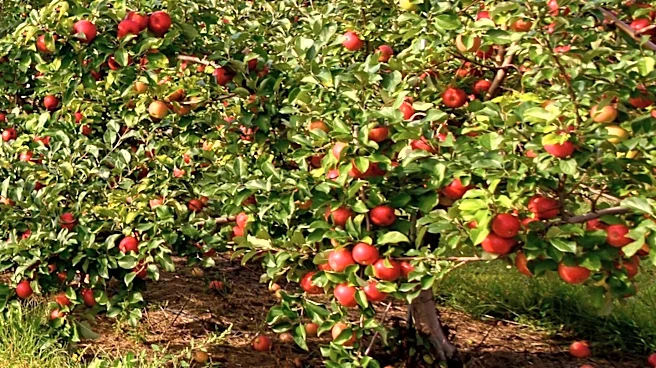
as labor costs, food safety, and extended producer responsibility laws. Apple growers, in particular, face significant challenges as labor costs have surpassed the value of their crops, making it difficult to sustain operations. The IFPA is advocating for improvements in the H-2A visa program to ensure a stable labor supply and for increased funding for research and mechanization to enhance productivity.
Why It's Important?
The challenges faced by apple growers and other specialty crop producers have broader implications for the U.S. agricultural sector and food supply chain. High labor costs threaten the viability of farms, potentially leading to reduced production and higher consumer prices. Addressing these issues through legislative action could stabilize the industry, ensuring a steady supply of fresh produce. Moreover, the Farm Bill's provisions could impact food safety standards and environmental sustainability, affecting public health and consumer confidence. The outcome of these discussions will be crucial for the future of U.S. agriculture and its ability to compete globally.
What's Next?
As Congress works to reconcile different versions of the Farm Bill, stakeholders will continue to advocate for policies that support specialty crops and address labor challenges. The IFPA and other industry groups are likely to engage in further lobbying efforts to ensure their priorities are reflected in the final legislation. The outcome of these negotiations will determine the level of support and resources available to apple growers and other producers, influencing their ability to adapt to economic pressures and maintain competitiveness.