



What's Happening?
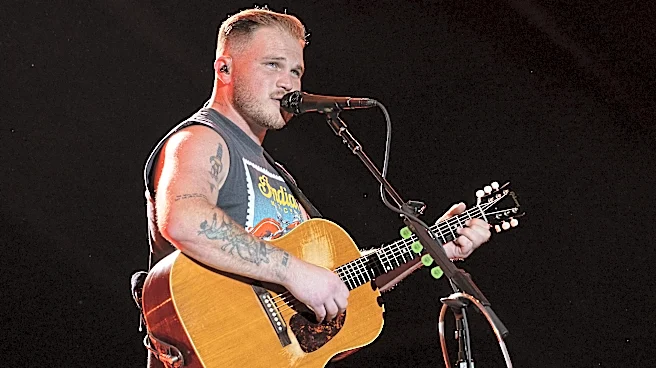
AoD Magazine has published an article titled 'ART OF DESIGN II - Sounds of the Culture: Zach Bryan,' which delves into the emotional depth and cultural significance of Zach Bryan's music, specifically focusing on his song 'The Way Home.' The author, Elijah
Rodriguez, describes Bryan's music as a departure from mass-produced content, offering a sense of authenticity and 'home.' The article highlights Bryan's gritty vocal style and his ability to convey pain and hope through his lyrics. It analyzes the song's narrative, which touches on themes of lost love, nostalgia, and the longing for past selves, using vivid imagery like references to The Killers, old Trans-Ams, and childhood memories. The piece suggests that Bryan's music resonates deeply with listeners because it captures universal feelings of memory, joy, pain, and truth, even if it doesn't fit conventional definitions of 'culture.'
Why It's Important?
This analysis of Zach Bryan's music is important because it underscores a growing appreciation for artists who offer raw, authentic emotional expression in an increasingly commercialized music industry. Bryan's success, as implied by the article, indicates a listener demand for music that feels personal and relatable, rather than formulaic. This trend can influence the broader music landscape, encouraging more artists to prioritize genuine storytelling and unique vocal styles over polished, mainstream appeal. For the country music genre, Bryan's approach challenges traditional norms and expands its cultural footprint, attracting listeners who might otherwise be disengaged from mainstream country. His ability to evoke a sense of 'home' and shared human experience through his songs fosters a deeper connection with his audience, highlighting the power of music as a medium for emotional processing and cultural reflection.
What's Next?
The continued critical attention to artists like Zach Bryan suggests a potential shift in music consumption and production. As listeners increasingly seek authenticity, music critics and platforms may further spotlight artists who prioritize emotional depth and unique artistic expression over commercial viability. This could lead to more diverse sounds gaining traction within mainstream music, potentially influencing radio programming and streaming service algorithms to feature a wider range of artists. For Bryan himself, this kind of critical acclaim could solidify his position as a significant voice in contemporary music, potentially leading to more extensive tours, collaborations, and further exploration of his distinctive style. The ongoing discussion around what constitutes 'culture' in music will likely continue, with artists like Bryan serving as key examples of evolving artistic values.
Beyond the Headlines
Beyond the immediate musical analysis, the article touches on broader societal implications regarding authenticity and the impact of technology on artistic creation. The author's desire for music that 'didn’t feel like it was pumped out of a machine' reflects a widespread sentiment against the perceived artificiality of modern media. This highlights a cultural yearning for genuine human connection and expression in an era dominated by digital content and algorithmic curation. Bryan's music, in this context, becomes a symbol of resistance against homogenization, offering a space for listeners to connect with raw, unfiltered emotion. This phenomenon suggests a deeper cultural shift where consumers are increasingly valuing the 'real' over the 'perfect,' influencing not just music but also other forms of art, media, and even consumer products. It points to a broader societal introspection about the role of technology in shaping human experience and the enduring need for authentic narratives.