




What's Happening?
Saudi Arabia's Public Investment Fund (PIF) is reportedly experiencing liquidity issues, leading to speculation about its long-term commitment to Newcastle United Football Club. According to former Manchester City financial adviser Stefan Borson, there's
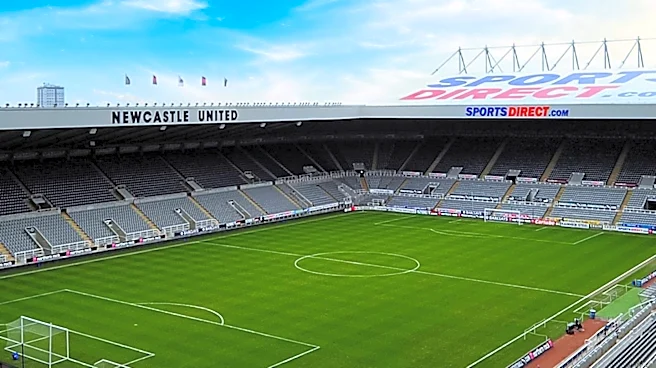
a growing sentiment in financial markets that the Saudis are facing cash flow challenges, a situation he describes as 'astonishing' given their historical cash-rich status due to oil. The war in the Middle East is cited as a contributing factor to this shift. PIF, which owns 84% of Newcastle United, is currently seeking new investment by looking to sell up to 25% of the club through new share issues. While sources close to The Guardian suggest PIF maintains a long-term commitment to the club, concerns are emerging among fans and financial observers about a potential gradual exit from St James' Park. The new investment is intended to fund major infrastructure projects, such as building a new stadium or redeveloping the current one.
Why It's Important?
This development is significant for the global sports and financial markets, particularly for the English Premier League and the broader landscape of sovereign wealth fund investments. A potential reduction or exit of PIF from Newcastle United could signal a shift in the investment strategies of major sovereign wealth funds, especially those from oil-rich nations. For Newcastle United, a change in ownership or a significant dilution of PIF's stake could impact its financial stability and ambitions for future growth and infrastructure development. The reported liquidity issues of PIF, a major global investor, could also have ripple effects across various sectors where it holds significant stakes, potentially influencing asset valuations and investment flows. This situation highlights the interconnectedness of geopolitical events, global financial markets, and the business of professional sports.
What's Next?
The immediate next step for PIF involves its efforts to secure new investment by selling up to 25% of Newcastle United's shares. This move will dilute the ownership of existing shareholders, including PIF itself. The success of this fundraising effort will be closely watched as an indicator of PIF's financial health and its commitment to the club. Stakeholders, including Newcastle United fans, financial analysts, and other potential investors, will be monitoring further announcements and actions from PIF. The long-term implications for Newcastle United's infrastructure projects, such as stadium development, will depend on the outcome of these investment efforts. The broader financial markets will also be observing how PIF manages its reported liquidity challenges and whether this leads to adjustments in its investment portfolio across other sectors.
Beyond the Headlines
The reported liquidity issues faced by the Saudi Public Investment Fund extend beyond the immediate financial implications for Newcastle United, touching upon deeper geopolitical and economic shifts. The mention of the war in the Middle East as a factor underscores how regional conflicts can have far-reaching consequences on global financial entities, even those historically perceived as cash-rich. This situation could prompt a re-evaluation of the stability and long-term investment capacity of sovereign wealth funds, particularly those heavily reliant on commodity prices and susceptible to geopolitical volatility. It also raises questions about the ethical and strategic considerations of sports club ownership by state-backed entities, especially when their financial health is influenced by broader political landscapes. The potential for PIF to scale back its investments could lead to a broader discussion about the sustainability of current investment trends in sports and other high-profile assets.