



What's Happening?
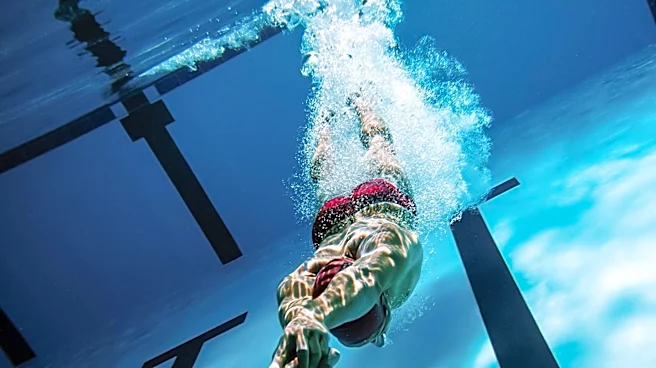
Five-time Olympic champion Kaylee McKeown has shared insights into her demanding daily routine, which includes nine pool sessions per week and a strict sleep schedule. McKeown, known for her success in swimming, emphasizes the critical role of sleep in her recovery
and performance. She wakes up at 5:30 a.m. and aims to be in bed by 8 p.m., often sleeping for over nine hours. This regimen, which she likens to being a 14-year-old on a school night, is designed to support her intense training. Her weekly schedule involves multiple two-hour pool sessions, an hour-long gym session, and physiotherapy appointments, particularly on Mondays when she has two such cycles. Core circuits are incorporated on Tuesday and Thursday nights, with other gym days focusing on strength conditioning and muscle mass. McKeown also maintains a careful diet, rich in carbohydrates, balanced with proteins and healthy fats, with a signature breakfast of a three-egg, halloumi, and mushroom wrap.
Why It's Important?
McKeown's detailed account of her training and recovery highlights the extreme dedication and scientific approach required to compete at an elite Olympic level. Her emphasis on sleep as a 'key recovery tool' underscores a growing recognition in professional sports of the importance of rest and recovery, not just physical exertion. This approach could influence aspiring athletes and sports programs in the U.S. by demonstrating a holistic view of athletic development that prioritizes well-being alongside training intensity. For the sports industry, it reinforces the value of sports science and personalized athlete care, potentially leading to further investment in sleep tracking, nutritionists, and physiotherapists. Her routine also offers a glimpse into the disciplined lifestyle necessary to maintain peak performance, setting a benchmark for athletic excellence and potentially inspiring a new generation of U.S. swimmers.
What's Next?
McKeown is currently focused on reclaiming two world records, indicating her continued pursuit of excellence in competitive swimming. Her ongoing adherence to this rigorous routine suggests a sustained effort to optimize her performance for future competitions, including upcoming Olympic cycles. Her public sharing of her routine may also prompt further discussions and research within the U.S. sports community regarding optimal training and recovery strategies. Other athletes and coaches might analyze her methods to adapt and integrate similar practices into their own programs, potentially leading to advancements in athletic preparation across various sports. The focus on specific dietary habits and recovery techniques like ice baths could also lead to broader adoption or further scientific study within U.S. sports science institutions.
Beyond the Headlines
Beyond the immediate athletic implications, McKeown's routine sheds light on the broader societal pressures and expectations placed on elite athletes. Her comment about feeling like a '14-year-old on a school night' subtly points to the sacrifices and disciplined lifestyle that often extend beyond the public's perception of glamorous athletic careers. This narrative can foster a deeper appreciation for the human element behind athletic achievements, moving beyond mere performance metrics. It also raises questions about the sustainability of such intense routines and the psychological toll they might take, prompting discussions on athlete mental health and long-term well-being within the U.S. sports landscape. Her candidness about less conventional habits, like sleeping with a blanket, humanizes the champion, making her more relatable and potentially inspiring a more nuanced understanding of athletic identity.