

What's Happening?
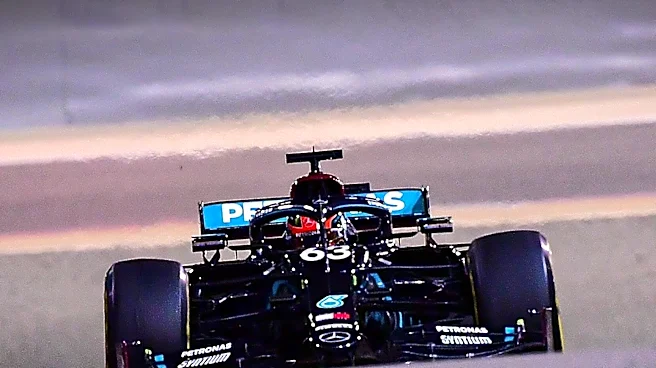
Mercedes will introduce an upgraded Formula 1 engine at the Las Vegas Grand Prix, but it will only be fitted to Andrea Kimi Antonelli’s car. This decision stems from George Russell having already exceeded his power unit allocation for the 2026 season
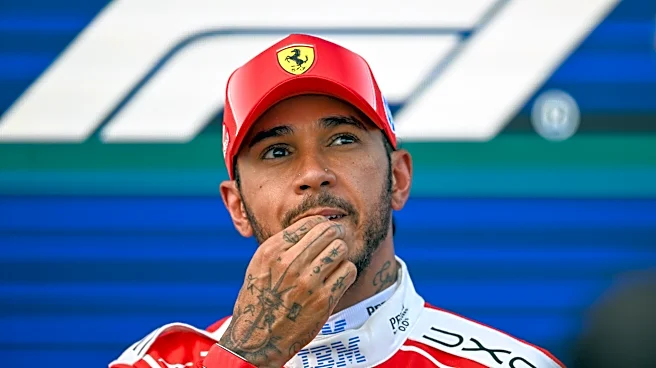
due to reliability failures, which would result in an automatic grid penalty if he received the upgrade. Mercedes team principal Toto Wolff stated that the performance benefit from the new turbo specification is expected to be relatively small, making it not worth the grid penalty for Russell. The team's priority for Russell is to protect his current grid position as he competes for second place in the drivers' world championship. Russell is currently third with 262 points, trailing Max Verstappen by 17 points and leading Lewis Hamilton by one point. Mercedes aims to secure a top-two finish in the drivers' standings by the end of the season.
Why It's Important?
This strategic decision by Mercedes highlights the complex trade-offs teams face in Formula 1, balancing performance gains with championship standings and regulatory penalties. By prioritizing Antonelli for the upgrade, Mercedes is using the opportunity to test new developments in race conditions without jeopardizing Russell's championship aspirations. For Russell, this means he must continue his fight for second place without the marginal performance boost, relying on his current car setup and driving skill. The decision underscores the importance of reliability throughout the season, as early power unit failures can have significant consequences later in the championship. The battle for second place in the drivers' championship remains tight, with only 18 points separating Verstappen, Russell, and Hamilton, making every race crucial for their final standings.
What's Next?
The Las Vegas Grand Prix will be the first opportunity to see the upgraded Mercedes engine in action on Antonelli's car, though its impact on overall performance is anticipated to be minor. For George Russell, the focus will be on maximizing his performance in the remaining three races—Las Vegas, Qatar, and Abu Dhabi—to secure second place in the drivers' championship without incurring any grid penalties. Mercedes has indicated that it will go 'full force' to support Russell in his pursuit of second place, potentially including strategic team decisions. The team will continue to work on unlocking more performance from the car in these final races, using them as opportunities to learn and improve for future seasons. The outcome of these races will determine the final standings in a closely contested championship battle.
Beyond the Headlines
This situation subtly reveals the internal dynamics and long-term planning within a top-tier Formula 1 team. While the immediate focus is on Russell's championship position, giving Antonelli the upgrade could also be seen as an investment in future development and a way to gather crucial data on new components under race conditions. It also highlights the intricate balance between individual driver ambitions and overall team objectives. The decision not to risk a grid penalty for Russell, despite the potential for a minor performance gain, demonstrates a pragmatic approach to championship management. This scenario could also influence future regulations regarding power unit allocations and in-season upgrades, as teams constantly seek competitive advantages within the established rules.