
What's Happening?
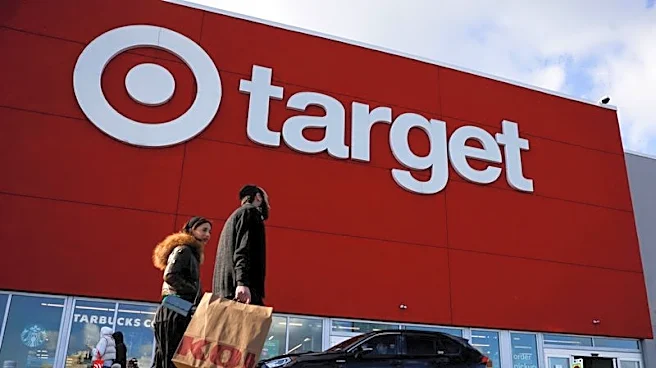
Target announced a significant boost to its net earnings in the second quarter, primarily driven by $752 million in tariff refunds. This, combined with robust sales performance, has led the retailer to increase
its financial outlook for the entire year. The company's positive results stand in contrast to some other retailers, such as Lowe's, which also benefited from tariff refunds but provided a more cautious outlook due to a slowdown in DIY spending and missed revenue expectations. The broader retail landscape is seeing varied performances, with Home Depot shares slightly down despite beating Wall Street's expectations, and Walmart's earnings report anticipated soon. The impact of tariff refunds appears to be a key factor in the differing financial outcomes for these major retailers.
Why It's Important?
The strong performance by Target, significantly aided by tariff refunds, highlights the direct financial impact of trade policies on major U.S. retailers. The $752 million boost to net earnings demonstrates how changes in import duties can directly translate into increased profitability and improved financial outlooks for companies. This situation also underscores the competitive dynamics within the retail sector, where some companies are better positioned to leverage external factors like tariff adjustments than others. For consumers, a healthier financial position for retailers like Target could potentially lead to more competitive pricing or continued investment in customer experience. Conversely, the struggles of companies like Lowe's, despite tariff benefits, indicate underlying challenges in specific market segments, such as the DIY sector, which could reflect broader economic shifts in consumer spending habits. The varying impacts across retailers suggest a complex economic environment where tariff policies play a crucial, but not singular, role in corporate success.
What's Next?
Target's upgraded annual profit and sales outlook suggests continued confidence in its operational strategies and market position. The company will likely focus on sustaining its sales momentum and potentially reinvesting its increased earnings. The upcoming earnings report from Walmart will provide further insight into the overall health of the U.S. retail sector and how other major players are navigating the current economic climate, including the effects of tariff policies. The differing performances among retailers like Target, Lowe's, and Home Depot indicate that while tariff refunds offer a significant advantage, other factors such as consumer spending patterns in specific categories (e.g., DIY versus general merchandise) will continue to shape their financial trajectories. Retailers will likely continue to monitor trade policies and consumer behavior closely to adapt their strategies.
Beyond the Headlines
The substantial impact of tariff refunds on Target's earnings brings to light the often-overlooked financial mechanisms that influence corporate profitability and, by extension, the broader economy. While tariffs are typically discussed in terms of international trade relations and consumer prices, their direct refund to companies can significantly alter financial statements and investment capacities. This situation also raises questions about the long-term sustainability of such boosts, as tariff policies can be subject to change. Furthermore, the contrasting fortunes of retailers like Target and Lowe's, despite both benefiting from tariff refunds, underscore the importance of internal business strategies, merchandising, and market segment resilience. It highlights that while external factors can provide tailwinds, a company's fundamental operational health and ability to adapt to evolving consumer demands remain paramount for sustained success in the competitive U.S. retail landscape.