







What's Happening?
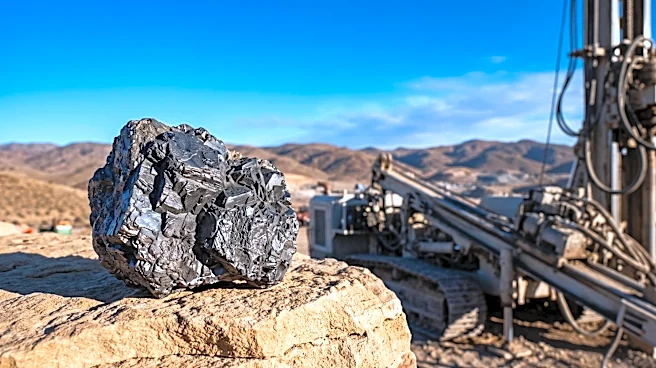
Global copper mine production is projected to experience its first annual decline since 2017, with a 1.1% drop in the first half of 2026, according to the International Copper Study Group (ICSG). This decline is primarily driven by reduced output in major
producing nations such as Chile, Indonesia, and the Democratic Republic of Congo. Chile, the world's largest copper producer, recorded its weakest second quarter in 19 years and has revised its full-year forecast to a 2.6% annual decline. Companies like Codelco and Freeport-McMoRan have reported double-digit production decreases. Simultaneously, demand for copper is surging, with S&P Global projecting a 50% increase from 28 million tons in 2025 to 42 million by 2040, driven significantly by artificial intelligence (AI) data centers, which use copper for 82% of their mineral mass, primarily in grid transmission and distribution.
Why It's Important?
The impending decline in copper supply amidst rapidly increasing demand signals a significant potential shortfall in a critical industrial metal. Copper is essential for electrification, renewable energy infrastructure, and advanced technologies like AI, making its scarcity a global economic concern. A supply deficit could lead to sustained high prices, impacting manufacturing costs across various sectors, from electronics and automotive to construction and energy. This situation could slow down the transition to green energy and the expansion of AI infrastructure, as these industries heavily rely on copper. The rising cost of finding new deposits—now $1,889 per ton compared to $8 in the 1990s—and the 17.5-year average lead time from discovery to production exacerbate the long-term supply challenges, indicating that current market dynamics are not easily resolved by short-term investments.
What's Next?
The copper market is likely to experience continued price volatility and upward pressure as the supply-demand imbalance intensifies. Major consumers, including technology giants and renewable energy companies, may increasingly seek direct partnerships or investments in mining operations to secure future supply, as evidenced by calls from Silicon Valley hyperscalers to mining executives. Governments may also explore policies to secure critical mineral supplies, potentially including incentives for domestic exploration and production or strategic stockpiling. Mining companies are expected to intensify exploration efforts, but the long lead times for new mines mean that any significant increase in supply is years away. This scenario could also accelerate research into alternative materials or more efficient copper usage.
Beyond the Headlines
The copper supply crisis highlights a generational challenge rooted in geology, exploration economics, and regulatory hurdles. The difficulty and cost of discovering new, viable deposits have dramatically increased, indicating that the 'easy' copper has already been found. This situation underscores the broader issue of resource depletion and the environmental and economic complexities of extracting remaining reserves. The surge in demand from AI and electrification also reveals how new technological advancements can create unforeseen pressures on existing resource supply chains. This could lead to geopolitical competition for access to copper-rich regions and a re-evaluation of global supply chain resilience for critical minerals, potentially driving innovation in recycling technologies and circular economy models to mitigate future shortages.