
What's Happening?
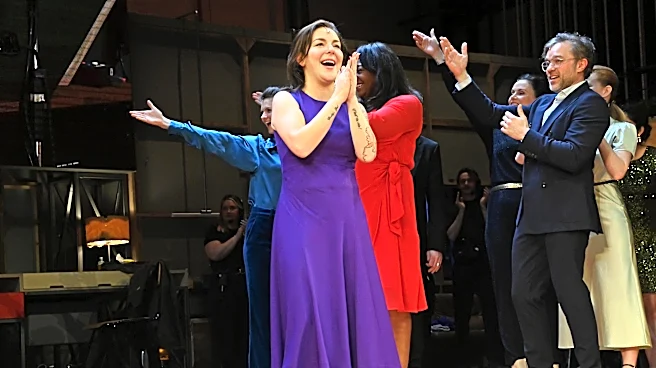
Director Jamie Lloyd has brought a vibrant, optimistic, and highly theatrical production of William Shakespeare's 'Much Ado About Nothing' to Broadway's Winter Garden Theatre. The production is characterized
by a constant cascade of pink paper petals, a giant inflatable heart as a central set piece, and the elevation of the character Margaret (Mason Alexander Park) to a fabulous musical cabaret host who performs pop songs. Tom Hiddleston stars as Benedick, delivering a hyper-conversational and interactive performance that engages directly with the audience. Hayley Atwell plays Beatrice, though Hiddleston is presented as the clear star of this rendition. Lloyd's interpretation downplays the complexities of the play, particularly the Claudio/Hero subplot, in favor of a celebratory, love-focused romp designed to appeal to a modern Broadway audience, especially Gen X women.
Why It's Important?
This production signifies a trend in contemporary theater to make classic works, particularly Shakespeare, more accessible and engaging for broad audiences. By infusing 'Much Ado About Nothing' with pop music, interactive elements, and a visually striking aesthetic, Lloyd aims to overcome the perceived barriers of traditional Shakespearean performances. The emphasis on spectacle and audience participation, as well as the casting of well-known actors like Tom Hiddleston, can attract new theatergoers and revitalize interest in classical plays. However, this approach also raises questions about the balance between entertainment and textual integrity, and how much a director can reinterpret a classic before it loses its original essence. The commercial success of such productions can influence future theatrical programming on Broadway, potentially leading to more experimental and visually driven adaptations of established works.
Beyond the Headlines
Jamie Lloyd's 'Much Ado About Nothing' reflects a broader cultural phenomenon of recontextualizing classic art for contemporary consumption. This production, with its overt celebration of love and its visually overwhelming pink confetti, can be seen as a commentary on modern escapism and the desire for uncomplicated joy in a complex world. The choice to downplay the darker, more problematic elements of the play, such as Hero's unjust shaming, suggests a preference for emotional gratification over critical engagement with difficult themes. This approach might resonate with audiences seeking a feel-good theatrical experience, but it also invites discussion about the role of theater in challenging versus comforting its viewers. The production's success could indicate a shift in audience expectations, where immersive and highly stylized experiences are prioritized, potentially influencing how future generations interact with and interpret classical literature.