






What's Happening?
Middlebury College recently held its fifth annual Día de Muertos celebration, bringing together faculty and students for a campus-wide event. The festivities, which took place on Sunday, November 1, included a procession featuring music and puppets, various
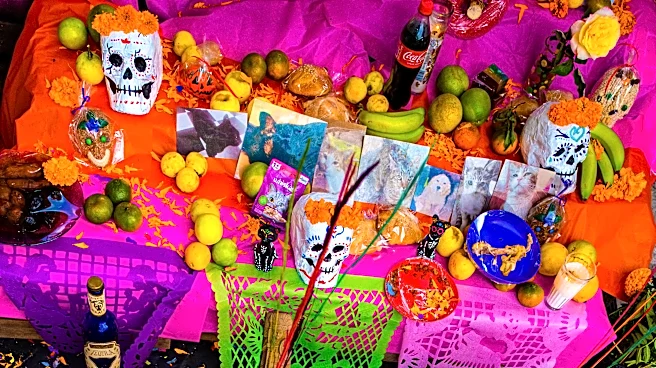
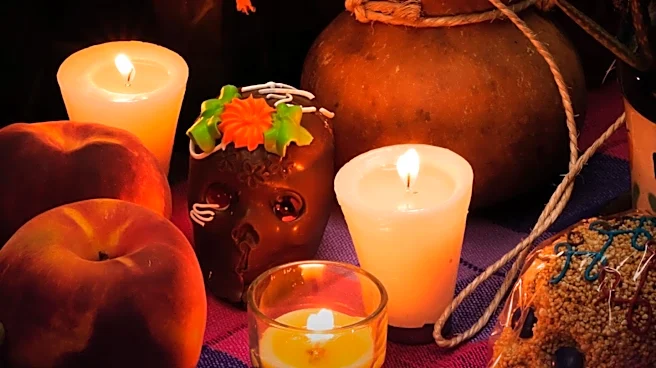
performances by theatre and dance groups, and a community ofrenda to honor deceased loved ones. Olga Sanchez Saltviet, assistant professor of theatre, highlighted that Día de Muertos emphasizes liveliness and vibrancy, contrasting with the often gloomy perceptions of death in other traditions. The event showcased a rich display of color, music, performance, and spoken word. Students from Sanchez Saltviet's course, 'Cultural Community Collaboration & Production,' played a significant role in organizing workshops and activities, underscoring the cultural importance of the celebration, particularly for the Hispanic community. The procession began at the Anderson Freeman Center, moved to St. Mary's Church where local community members joined, and continued through campus, culminating in performances at Gifford Amphitheatre and Proctor Terrace.
Why It's Important?
This annual Día de Muertos celebration at Middlebury College is important for several reasons. It provides a vital platform for cultural expression and preservation, particularly for the Hispanic community within the college and surrounding areas. By hosting such an event, the institution fosters a more inclusive environment, allowing students to connect with their heritage and share it with a broader audience. The celebration also serves as an educational tool, as students involved in its production gain practical experience in cultural event management and deepen their understanding of the holiday's significance. Furthermore, it promotes cross-cultural understanding among the student body and faculty, exposing them to diverse traditions and perspectives on life and death. The emphasis on vibrancy and community in honoring the deceased offers an alternative narrative to more somber approaches to remembrance, potentially enriching the emotional and spiritual landscape of the campus community.
What's Next?
Following the success of its fifth annual Día de Muertos celebration, Middlebury College is likely to continue this tradition in the coming years, further solidifying its place as a significant cultural event on campus. The involvement of academic courses like 'Cultural Community Collaboration & Production' suggests a sustained commitment to integrating such celebrations into the curriculum, ensuring ongoing student engagement and leadership. Future events may see expanded participation from local community members, further strengthening town-gown relations and broadening the cultural impact of the celebration. There is potential for increased interdepartmental collaboration, perhaps involving departments like music, art, and anthropology, to enrich the artistic and educational components of the festivities. The college may also explore ways to document and share the experiences from these celebrations more widely, potentially through digital archives or public exhibitions, to extend their reach beyond the immediate campus community.
Beyond the Headlines
The Día de Muertos celebration at Middlebury College extends beyond a mere cultural event; it represents a deeper engagement with themes of memory, community, and cultural identity in a diverse academic setting. The syncretic nature of Día de Muertos, blending indigenous and Catholic traditions, offers a rich case study for understanding cultural fusion and adaptation. By actively celebrating this holiday, the college implicitly acknowledges and values diverse ways of processing grief and honoring ancestors, which can have profound psychological and social benefits for participants. It challenges dominant cultural narratives around death, promoting a more celebratory and communal approach to remembrance. This initiative also highlights the role of educational institutions in fostering cultural literacy and empathy, preparing students to navigate an increasingly globalized world with a greater appreciation for diverse human experiences and traditions. The continued success of this event could inspire other institutions to adopt similar inclusive cultural programming.