







What's Happening?
Brazil and Uzbekistan are actively working to transform their diplomatic engagement into a broader economic partnership, aiming to connect Latin America's largest economy with Central Asia's growing commercial and investment landscape. This initiative
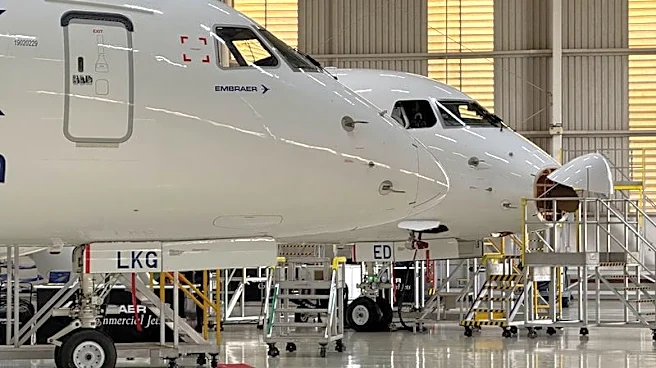
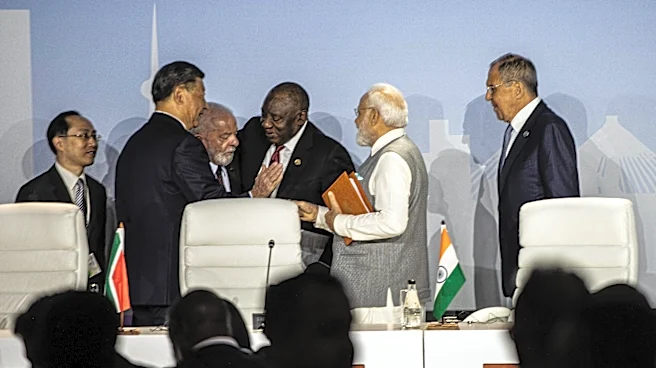
is further facilitated by Uzbekistan's status as a BRICS partner country since January 1, 2025. Brazilian Foreign Minister Mauro Vieira and Uzbek counterpart Bakhtiyor Saidov recently discussed strengthening political dialogue, expanding bilateral trade and investment, and deepening cooperation in tourism, culture, and humanitarian exchanges. A key focus of their discussions was the follow-up to a business roundtable held in May 2026, which involved representatives from both countries' business communities, including major Brazilian companies like Embraer, WEG, and Petrobras. The immediate goal is to move beyond diplomatic talks and business introductions to achieve measurable trade growth, investment commitments, and concrete joint projects.
Why It's Important?
This developing partnership signifies a growing trend in South-South economic cooperation, emphasizing practical commercial connections over mere diplomatic expansion. For Brazil, deeper engagement with Uzbekistan opens new market opportunities in Central Asia, a region with increasing economic importance. Conversely, Uzbekistan stands to gain wider access to Latin American markets, industrial expertise, agricultural technology, and investment partnerships through stronger ties with Brazilian businesses. The BRICS partner country framework provides an additional institutional channel for engagement, including summit-level and foreign-ministerial consultations, complementing existing cooperation at the United Nations and other international platforms. This collaboration could lead to significant economic benefits for both nations by diversifying trade routes and investment portfolios.
What's Next?
The immediate next steps involve translating diplomatic discussions and business introductions into tangible economic outcomes. This includes securing measurable trade growth, firm investment commitments, and the initiation of joint business projects between Brazilian and Uzbek companies. Both countries will likely continue to leverage the BRICS partner country mechanism for further high-level consultations and to identify new avenues for collaboration. The success of this partnership will be measured by the commercial value and specific projects that emerge from these efforts, potentially setting a precedent for how BRICS partner countries can foster economic integration across distant regions. Future engagements will likely focus on sector-specific opportunities identified during previous business roundtables.
Beyond the Headlines
The Brazil-Uzbekistan economic alignment, facilitated by the BRICS framework, highlights a broader geopolitical shift towards a more multipolar global economy. It demonstrates how emerging economies are actively forging new trade and investment corridors independent of traditional Western-centric networks. This initiative could inspire other BRICS partner countries to explore similar cross-regional economic partnerships, fostering a more interconnected and diversified global trade landscape. The emphasis on practical commercial connections rather than solely diplomatic ties suggests a pragmatic approach to international relations, where economic mutual benefit drives strategic alliances. This could lead to a re-evaluation of existing global supply chains and the emergence of new economic powerhouses through South-South cooperation.