





What's Happening?
Ted Kellner, a prominent alumnus of the University of Wisconsin-Madison, has been a significant donor to the university's athletic programs and broader educational initiatives. His contributions are visible across campus, including Kellner Hall, the Kohl
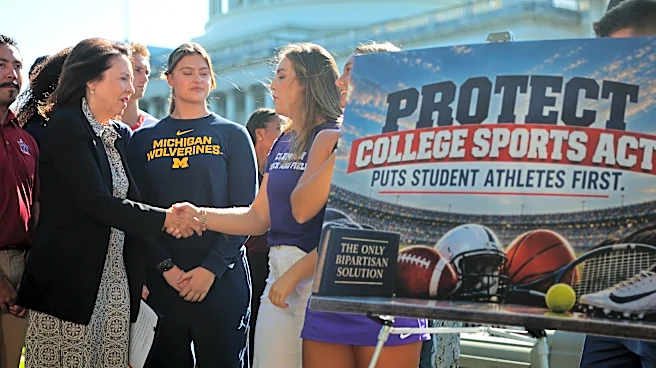
Center’s Kellner Club, and the new Kellner Family Athletic Center. Kellner, who graduated in 1969 with a business administration degree, co-founded Fiduciary Management Inc. and chairs Fiduciary Real Estate Development Inc. His lifelong support for Badger sports dates back to his childhood, attending games with his father, Jack Kellner, a former Big Ten Champion in track and field. Ted Kellner also played on the UW-Madison basketball team for three years. His financial commitment to Wisconsin athletics has been consistent since 2002, spanning various coaches and eras. He was also instrumental in the early stages of Wisconsin's Name, Image, and Likeness (NIL) era, co-founding the Varsity Collective in 2022 to create NIL opportunities for student-athletes. This initiative has become a crucial part of Wisconsin's strategy to navigate the evolving college sports landscape, particularly with the expansion of the transfer portal in NCAA football and basketball.
Why It's Important?
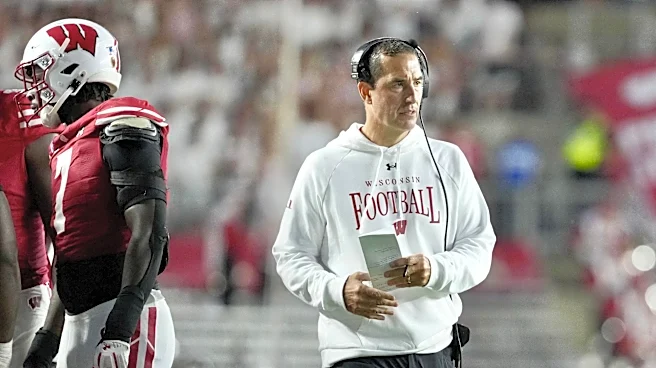
Kellner's extensive philanthropy is vital for the University of Wisconsin-Madison, particularly in the competitive environment of collegiate athletics. His investments in state-of-the-art athletic facilities, such as the Kellner Family Athletic Center, are designed to attract and retain top talent in an era dominated by the transfer portal and Name, Image, and Likeness (NIL) opportunities. These facilities aim to provide a premier student-athlete experience, enabling Wisconsin to compete with other Big Ten programs that often benefit from billionaire alumni. The success of these initiatives is evident in the 2025 transfer portal cycle, where Wisconsin Football Head Coach Luke Fickell recruited 33 transfers, demonstrating the impact of a supportive environment. Beyond athletics, Kellner's $25 million commitment to the university's 'All Ways Forward Campaign' in 2017, part of a larger $4.2 billion fundraising effort, has significantly bolstered education, research, and outreach. This campaign has funded thousands of new student scholarships, increased endowment funding for faculty, supported research and innovation, and financed major campus capital projects, underscoring the broad impact of his contributions on the university's academic and infrastructural development.
What's Next?
While Ted Kellner's contributions have been substantial, the University of Wisconsin-Madison faces the ongoing challenge of diversifying its funding sources. Unlike some other Big Ten schools that can rely on multiple billionaire alumni, Wisconsin will need to attract additional donors to sustain its competitive edge in athletics and academic programs. The 'Building Championship' campaign, supported by Kellner's investments, will continue to focus on creating an environment that can keep pace with the evolving NIL sports economy and the transfer portal. The Varsity Collective, which Kellner helped establish, will likely continue its efforts to provide NIL opportunities for Badger athletes, adapting to future changes in NCAA regulations. The university's broader fundraising efforts, such as the 'All Ways Forward Campaign,' will persist in their goal to expand teaching, research, and outreach initiatives. The long-term success of these endeavors will depend on the university's ability to cultivate new philanthropic relationships and maintain the momentum generated by donors like Kellner, ensuring continued growth and competitiveness across all facets of the institution.
Beyond the Headlines
Ted Kellner's philanthropic model highlights a growing trend in collegiate sports where individual donors play an increasingly critical role in shaping the future of university athletic programs. His early involvement in the Name, Image, and Likeness (NIL) era through the Varsity Collective demonstrates a proactive approach to navigating the complex and rapidly changing landscape of college athletics. This shift raises ethical considerations regarding the influence of private wealth on amateur sports and the potential for disparities between institutions with varying donor bases. The emphasis on creating 'NFL-quality' facilities and a superior student-athlete experience, while beneficial for recruitment, also underscores the professionalization of college sports. Furthermore, Kellner's dual commitment to both athletics and academic initiatives through the Wisconsin Foundation and Alumni Association (WFAA) illustrates a holistic view of university advancement. His philosophy, encapsulated by the 'ripples keep going' quote, suggests a desire for lasting impact beyond immediate financial contributions, aiming to foster a culture of sustained support and development for the entire university community.