

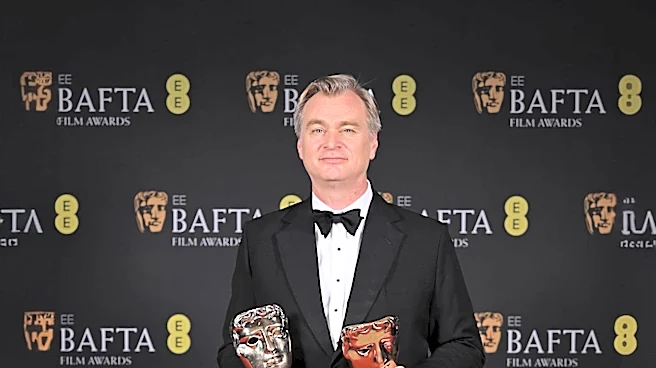
What's Happening?
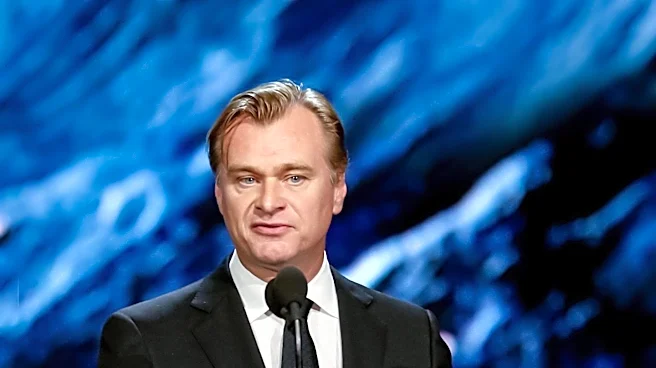
Christopher Nolan's adaptation of 'The Odyssey' has sparked significant debate among audiences and scholars. While the film has achieved commercial success, it has faced criticism from Emily Wilson, the translator of the source material, who disapproves
of the adaptation's script and character portrayals. The film's modern language and casting choices have also been points of contention. Despite these critiques, the movie continues to draw large audiences, particularly for its IMAX screenings, showcasing Nolan's ability to create visually compelling cinema.
Why It's Important?
The discourse surrounding 'The Odyssey' highlights the challenges of adapting classic literature for modern audiences. It raises questions about artistic interpretation, fidelity to source material, and the balance between creative vision and audience expectations. The film's reception reflects broader cultural conversations about representation, authenticity, and the role of adaptations in preserving or transforming literary works. This case illustrates the complexities filmmakers face in reimagining well-known stories while navigating public and critical scrutiny.
What's Next?
As 'The Odyssey' continues its theatrical run, discussions about its adaptation choices are likely to persist. The film's success may influence future adaptations of classic literature, encouraging filmmakers to explore innovative approaches while considering audience and critical feedback. The ongoing debate may also impact how studios approach marketing and audience engagement for similar projects. Scholars and critics will continue to analyze the film's impact on the legacy of the original work and its place in contemporary cinema.