



What's Happening?
Oil prices increased on Friday due to heightened concerns about Middle Eastern oil supplies following a series of attacks. Brent crude futures reached $96.19 per barrel, while US West Texas Intermediate crude stood at $85.41 per barrel. This surge occurred
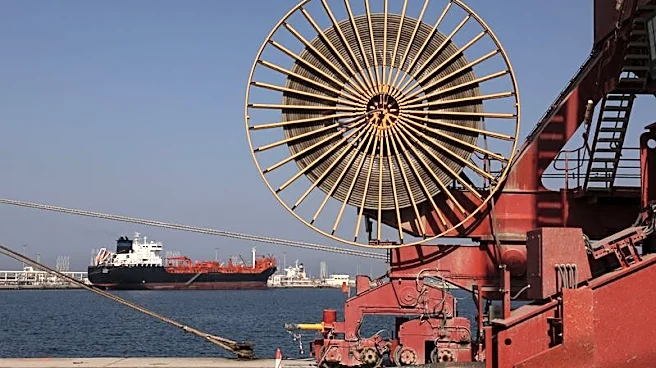
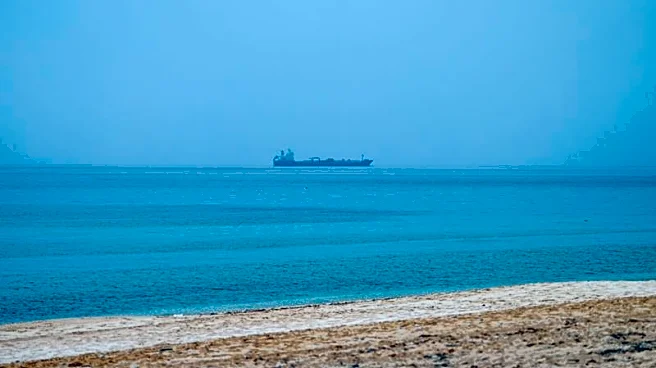
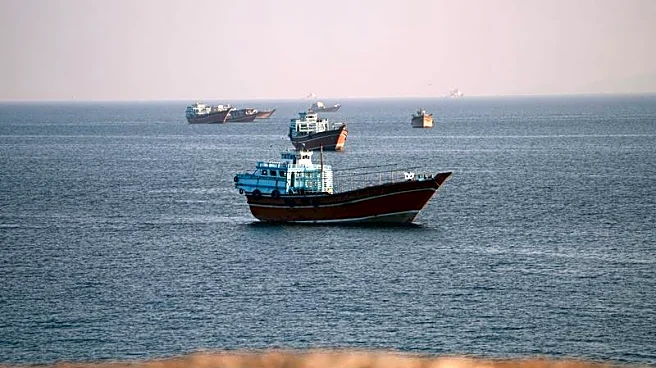
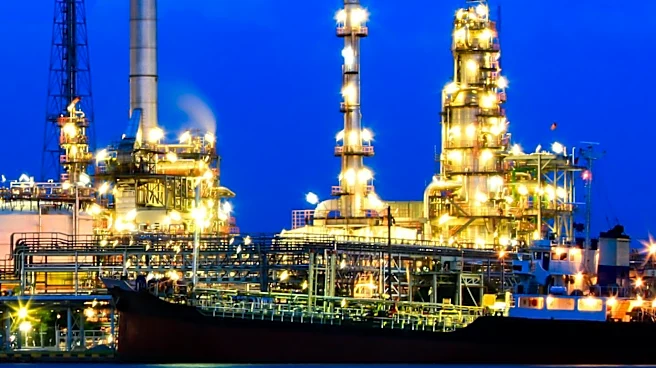
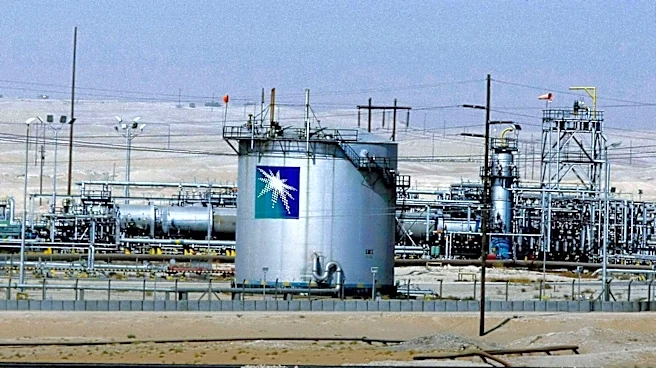
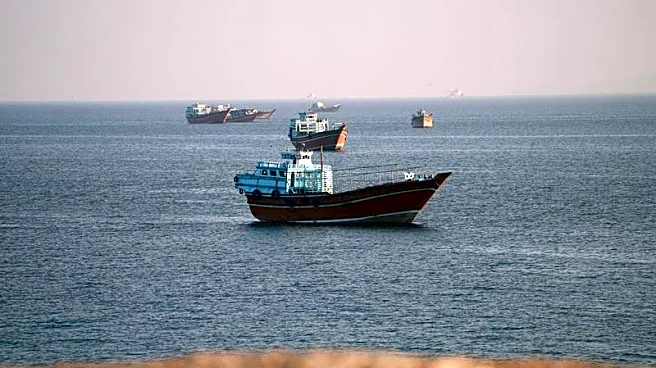
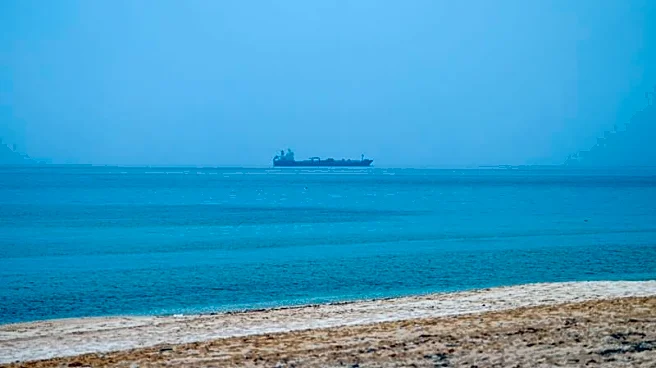
after an attack on Saudi Aramco’s Jazan refinery on Thursday, which temporarily halted some operations and resulted in one fatality and several injuries. The UK Maritime Trade Operations (UKMTO) reported an unidentified projectile striking a tanker in the Strait of Hormuz. Additionally, Iran’s Islamic Revolutionary Guard Corps (IRGC) claimed two oil tankers caught fire after hitting sea mines in the northern Strait of Hormuz, alleging unauthorized shipping routes. The Saudi-led Arab Coalition attributed the Jazan refinery attack to Iran-backed Houthi rebels in Yemen. This incident followed a previous Houthi claim of targeting the Ras Tanura refinery, Saudi Arabia’s largest. Beyond the Middle East, the Slavyansk oil refinery in Russia’s Krasnodar region also sustained significant damage from a drone attack, leading to an oil spill.
Why It's Important?
The rise in oil prices directly impacts U.S. consumers and industries through increased fuel costs, potentially leading to higher transportation expenses and inflationary pressures. The instability in the Middle East, a critical region for global oil production, underscores the fragility of international energy markets. Attacks on key infrastructure like Saudi Aramco’s refineries and tankers in the Strait of Hormuz, a vital shipping lane, threaten the consistent flow of oil, which can disrupt global supply chains and economic stability. For the U.S., a major oil consumer, such disruptions can necessitate strategic petroleum reserve releases or influence foreign policy decisions to secure energy supplies. The involvement of various actors, including Iran-backed groups, highlights ongoing geopolitical tensions that could escalate, further impacting global oil prices and potentially leading to broader economic and political ramifications for the U.S. and its allies.
What's Next?
Investors are closely monitoring the upcoming November 29 meeting of the OPEC+ group, which includes the Organization of the Petroleum Exporting Countries (OPEC) and other non-OPEC producers. The group's decisions regarding production policy for 2027 will be crucial in determining future oil supply levels and, consequently, global oil prices. Any adjustments to production quotas by OPEC+ could either alleviate or exacerbate the current supply concerns. Furthermore, the ongoing geopolitical tensions in the Middle East, particularly the actions of Iran-backed Houthi rebels and the responses from Saudi Arabia and its allies, will continue to influence market sentiment. The potential for further attacks on oil infrastructure or shipping routes remains a significant risk, which could lead to continued volatility in oil prices. The international community will likely focus on diplomatic efforts to de-escalate tensions and ensure the security of critical energy transit points.
Beyond the Headlines
The recurring attacks on oil infrastructure and shipping lanes in the Middle East highlight a broader shift in regional conflict dynamics, where energy assets are increasingly becoming targets. This trend not only poses immediate economic threats but also raises long-term questions about the security of global energy supplies and the effectiveness of international maritime security efforts. The involvement of non-state actors, such as the Houthi rebels, complicates traditional geopolitical responses and underscores the challenges of protecting critical infrastructure in volatile regions. For the U.S., these events may accelerate discussions around energy independence and diversification of energy sources to reduce reliance on politically unstable regions. Furthermore, the incidents could prompt a re-evaluation of naval presence and security protocols in key maritime chokepoints like the Strait of Hormuz, potentially leading to increased military deployments and international cooperation to safeguard global trade routes.