


What's Happening?
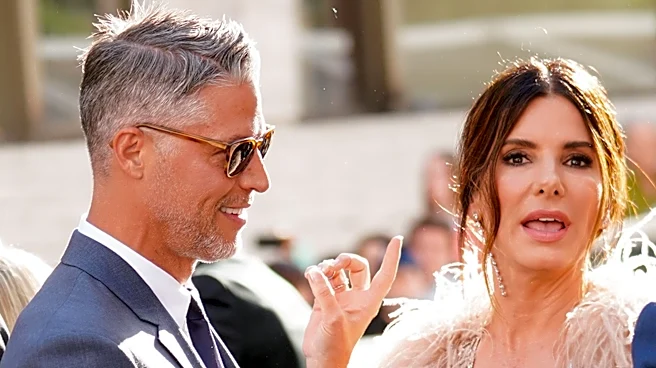
Actress Sandra Bullock, 62, has publicly addressed the death of her long-term partner, Bryan Randall, for the first time. Randall passed away in 2023 at the age of 57 from motor neuron disease (MND), also known as ALS in the U.S. Bullock revealed on the SmartLess
Podcast that Randall had requested his diagnosis be kept private, a wish she honored. She explained that this decision led to her isolation during his three-year battle with the illness, which coincided with the COVID-19 pandemic. Bullock managed Randall's care and raised their two adopted children while keeping his condition a secret from most, with only her sister initially aware. The actress confided in close friends Jennifer Aniston and Amanda Anka later on. Randall had been sober for 14 years before his diagnosis, and Bullock noted that his 'person left a lot earlier than the body left,' indicating a prolonged period of grief.
Why It's Important?
This revelation highlights the profound personal challenges faced by public figures dealing with private tragedies, particularly when respecting a loved one's wish for privacy. Bullock's experience underscores the emotional and logistical burdens of caring for someone with a debilitating illness like ALS, a progressive neurodegenerative disease with no cure. Her account sheds light on the isolating nature of such a journey, especially when compounded by global events like the pandemic. The story also brings attention to ALS, a condition that affects nerve cells in the brain and spinal cord, leading to full-body paralysis. The decision to keep the diagnosis private, while honoring Randall's wishes, demonstrates the complex balance between personal grief and public life, and the toll it can take on mental and emotional well-being.
What's Next?
While Bullock has now spoken about Randall's death, the immediate future will likely involve her continued processing of grief and potentially advocating for greater awareness or support for families affected by ALS. Her public statement may encourage others facing similar private battles to seek support or share their experiences, potentially fostering a more open dialogue around terminal illnesses and the importance of caregiver well-being. There are no indications of specific future actions from Bullock, but her candor could inspire further conversations about privacy, celebrity, and the human experience of loss. The focus will likely remain on her personal healing and the well-being of her children.
Beyond the Headlines
Bullock's narrative delves into the ethical considerations surrounding privacy in the digital age, particularly for public figures. Randall's request for privacy, and Bullock's commitment to it, raises questions about the boundaries between public interest and personal autonomy, especially during vulnerable times. The isolation Bullock experienced, despite her public profile, underscores a universal aspect of grief and caregiving: the profound loneliness that can accompany such journeys, regardless of external circumstances. Her story also subtly touches upon the societal pressure on celebrities to maintain a certain image, even in the face of immense personal suffering. The 'trifecta that was pretty dark'—Randall's illness, the pandemic, and raising young children—illustrates the cumulative impact of multiple stressors on an individual's resilience and mental health.