






What's Happening?
Hellman & Friedman, along with other principal backers of Medline, including Blackstone, The Carlyle Group, Singapore sovereign wealth fund GIC, and Abu Dhabi Investment Authority, have reduced their collective stake in the medical equipment supplier.
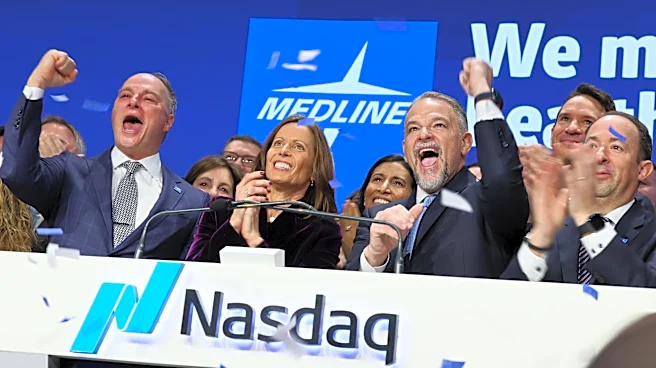
This move, which marks the third sponsor selldown since Medline went public less than a year ago, raised approximately $2.3 billion. The transaction involved a marketed follow-on offering of 60 million shares priced at $35.50 each, alongside a concurrent share repurchase of $200 million worth of stock by Medline from the sellers at the same price. Following a 4.5% drop during the two-day marketing period, Medline shares rebounded to close at $39.16, representing a 10.3% paper profit. The consortium, which acquired Medline in 2021 in a roughly $34 billion leveraged buyout, took the company public in December 2025 through a $7.2 billion all-primary IPO at $29 per share. This latest transaction has reduced the backers' stake from 45.5% to 39.6%.
Why It's Important?
This significant reduction in ownership by major private equity firms and sovereign wealth funds signals a strategic shift in their investment in Medline. For the U.S. financial markets, such large-scale selldowns by institutional investors can influence stock performance and investor sentiment. The ability of these backers to generate over $8 billion since Medline's IPO, including previous sales of $3.5 billion in March and $2.7 billion in May, demonstrates a successful monetization strategy for their initial leveraged buyout. This trend of private equity firms taking companies public and then gradually divesting their stakes is a common practice, but the scale and frequency of these selldowns in Medline's case highlight the strong market demand for the company's stock and the backers' intent to realize returns. The challenge of marketing these offerings to allow existing shareholders to sell and reload on the public offering underscores the complexities of managing large-scale divestments in a newly public company.
What's Next?
Medline is expected to become eligible for well-known seasoned issuer status around the first anniversary of its IPO next month. This status would grant the company automatic shelf registration and significantly greater flexibility for future secondary offerings, potentially streamlining the process for further sponsor exits. Currently, as a newly public company, Medline has been required to execute sponsor selldowns through marketed follow-on offerings, which are more time-consuming than the accelerated overnight block trades used by more seasoned issuers. The latest transaction includes a 75-day lockup period, though similar restrictions were waived for previous selldowns. Future divestments are likely to be influenced more by market conditions and investor demand than by contractual lockups. Proposed SEC rules, if adopted, could also permit many newly public companies to access shelf registrations sooner, further impacting the flexibility of such transactions.
Beyond the Headlines
The ongoing monetization program by Medline's private equity sponsors reflects a broader trend in the U.S. private equity landscape, where firms acquire companies, optimize their operations, and then take them public to realize substantial returns. The repeated selldowns by Medline's backers, even with lockup periods, illustrate the strategic agility required to navigate public markets and maximize investor value. This approach can lead to significant capital gains for the private equity firms and their limited partners, but it also raises questions about the long-term commitment of these investors to the companies they take public. The potential for Medline to achieve well-known seasoned issuer status highlights the regulatory mechanisms designed to facilitate capital raising and liquidity in public markets, which can benefit both companies and their investors. The SEC's proposed reforms to allow earlier access to shelf registrations could further accelerate this cycle, potentially altering the dynamics of post-IPO sponsor exits.