








What's Happening?
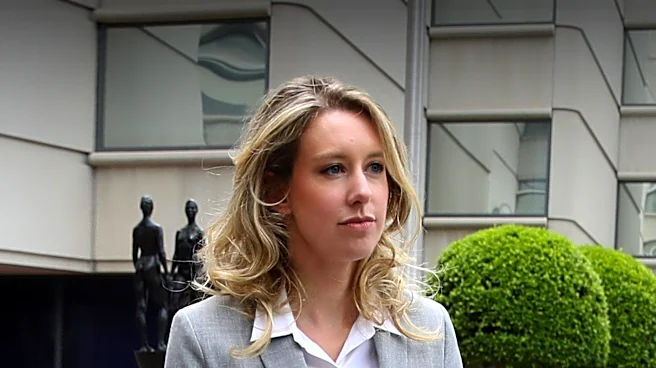
A new documentary film titled 'You Can See Everything,' co-directed by Lance Oppenheim and Nathan Fielder, delves into the life and public image of Elizabeth Holmes, the founder of Theranos. The film, which premiered as a secret screening at the Telluride
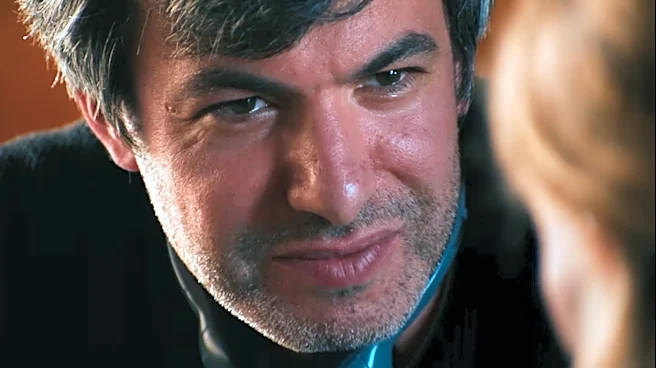
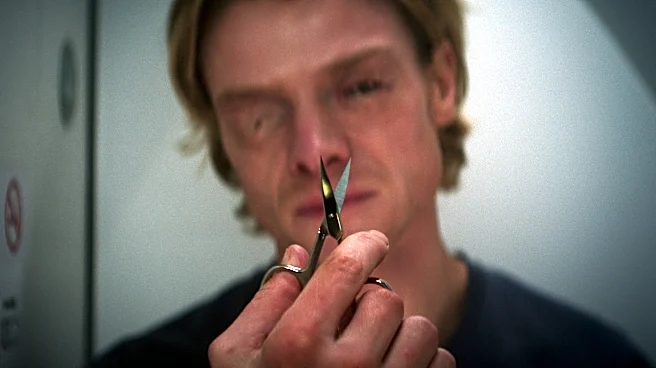
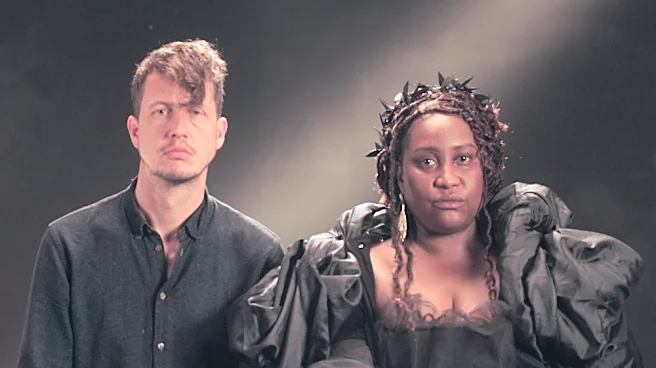
Film Festival, chronicles Holmes' final days before her 11-year prison sentence, with her and her husband Billy Evans collaborating with the filmmakers in 2023. The documentary explores Holmes' attempts to reboot the Theranos project and her responses to questions about the company's legitimacy, often characterized by opaque statements. A significant portion of the film examines how Evans has managed Holmes' public image, including her X account and the use of artificial intelligence to recreate her likeness, particularly after she began her prison sentence. The film also employs actors Christopher Abbott and Amanda Seyfried to reenact unfilmed past encounters, adding a meta-commentary on truth and representation.
Why It's Important?
This documentary is important because it offers a complex and multi-layered examination of a high-profile figure convicted of defrauding investors, raising critical questions about media portrayal, public perception, and the nature of truth. For the U.S. public, particularly those interested in business ethics, legal accountability, and the intersection of technology and society, the film provides a unique perspective on Holmes' narrative. It highlights how individuals, even those facing severe legal consequences, can attempt to control their public image through modern tools like social media and AI. The use of reenactments and meta-commentary challenges viewers to critically assess the information presented, blurring the lines between fact and fiction in documentary filmmaking. This approach can influence how audiences consume news and documentaries, fostering a more skeptical and analytical view of narratives, especially those involving controversial public figures. The film's exploration of power dynamics in relationships and the impact of media coverage on an individual's legacy also holds broader societal relevance.
What's Next?
The release of 'You Can See Everything' is likely to spark renewed public discussion about Elizabeth Holmes, Theranos, and the broader implications of corporate fraud and media representation. Viewers and critics will continue to analyze the film's unconventional narrative techniques, particularly its use of AI recreations and actor reenactments, potentially influencing future documentary filmmaking approaches. The film's exploration of how Holmes' public image is managed by her husband, Billy Evans, could lead to further scrutiny of how convicted individuals attempt to shape their narratives from behind bars. Discussions may also arise regarding the ethical boundaries of documentary filmmaking, especially when subjects are actively involved in shaping their portrayal. The film's philosophical undertones about understanding human motivations and the elusive nature of truth could also contribute to academic and cultural conversations about celebrity, accountability, and the impact of digital media on personal legacies. The documentary's reception may also influence public perception of other high-profile legal cases and the role of media in shaping public opinion.
Beyond the Headlines
Beyond its immediate subject, 'You Can See Everything' delves into profound ethical and cultural dimensions. The film's use of AI to recreate Holmes' likeness and the management of her social media by Evans raise questions about digital identity, autonomy, and the potential for manipulation in the age of advanced technology. It highlights how AI can be leveraged not just for practical applications but also for shaping personal narratives and public perception, even for individuals in prison. The meta-commentary embedded in the film, particularly through Amanda Seyfried's portrayal and her candid reflections, prompts viewers to consider the biases inherent in storytelling and the construction of 'truth' in media. This challenges the traditional role of documentaries as objective purveyors of fact, suggesting a more fluid and interpretive approach. The film also subtly explores the psychological aspects of celebrity and public scrutiny, demonstrating how individuals navigate immense pressure and attempt to reclaim agency over their stories, even when facing severe legal and social condemnation. This deeper exploration encourages a critical examination of how society consumes and judges public figures, and the complex interplay between personal narrative, media representation, and technological advancements.