






What's Happening?
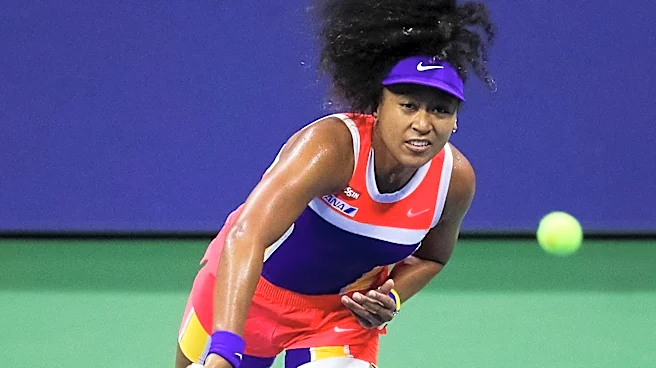
Naomi Osaka, the four-time Grand Slam champion and former world No. 1, stands at 5 feet 11 inches (1.80 meters), a height consistently confirmed by major authorities including the WTA, US Open, and Wikipedia. This physical attribute is identified as the foundation
of her powerful and feared serve, which has been instrumental in her career, leading to four major titles before her 24th birthday. Her height allows her to strike the ball at a higher contact point than most opponents, generating a steeper downward angle into the service box and making her serve difficult to return. This physical advantage contributes to her first serve regularly exceeding 115 mph and a second serve with significant kick.
Why It's Important?
Osaka's height and its direct impact on her serve highlight a significant aspect of modern women's tennis, where physical attributes play an increasingly crucial role in player dominance. Her ability to leverage her height for a powerful serve provides a strategic advantage, influencing match outcomes and forcing opponents to adapt their game. This emphasis on physical prowess, particularly height and power, could shape future training methodologies and player development in tennis. For aspiring athletes, understanding how specific physical traits translate into on-court advantages, as demonstrated by Osaka, can inform their training and strategic approaches. Her success underscores that while skill and mental fortitude are vital, physical characteristics can be a decisive factor in reaching the elite level of the sport.
What's Next?
As Naomi Osaka continues her comeback season in 2026, her height and powerful serve will remain central to her strategy. Her coach, Tomasz Wiktorowski, is focusing on optimizing her movement to complement her powerful game, aiming to make her 5'11" frame move like a smaller player's. This ongoing refinement suggests that Osaka will continue to rely on her serve as a primary weapon while working to enhance her overall court coverage and agility. Her performance in upcoming tournaments, particularly Grand Slams, will demonstrate the effectiveness of this integrated approach. The continued development of her game, balancing power with improved movement, will be key to her pursuit of further major titles and a return to the top of the rankings.
Beyond the Headlines
The detailed analysis of Naomi Osaka's height and its influence on her game extends beyond mere physical statistics, touching upon broader themes in sports science and athlete development. It illustrates how specific biomechanical advantages can be cultivated and integrated into a player's overall strategy. This focus on physical attributes also implicitly raises discussions about genetic predispositions in sports and how they interact with training and technique. Furthermore, Osaka's journey, including her mental health advocacy and motherhood, adds layers to her narrative, showcasing how athletes navigate personal challenges while maintaining peak physical performance. Her story becomes a case study in resilience, strategic adaptation, and the multifaceted demands placed on elite athletes in contemporary sports.