







What's Happening?
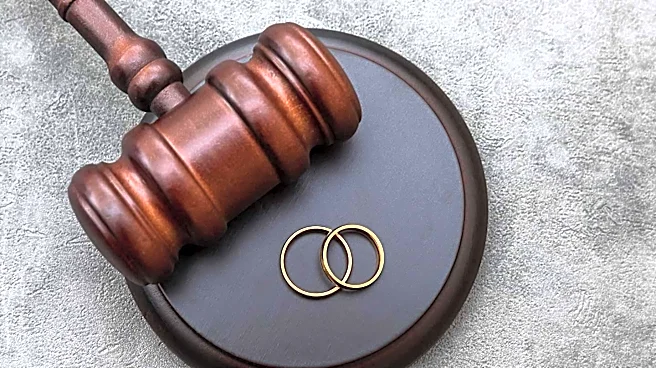
In Phoenix, Arizona, judges at the Downtown Justice Center regularly officiate courthouse weddings, with couples arriving every Monday through Friday between 4:30 and 5 p.m. to be legally married. This daily ritual sees a diverse array of couples, some
opting for traditional attire, while others embrace unique themes, such as Halloween costumes. For many, courthouse weddings offer a practical solution due to financial considerations, legal requirements, or the desire for a simpler, more intimate ceremony. For instance, one couple, Trace Hunt and Carmen Diaz, chose a courthouse wedding for legal reasons before a larger ceremony in Mexico, while another, Amanda Gardner and Jesus Mayorga, sought marriage to start a family. Judges like Leonore Driggs and Rebecca Rios conduct these ceremonies efficiently, often completing them in about five minutes, providing a welcome contrast to their usual court duties involving evictions or fines.
Why It's Important?
Courthouse weddings serve a vital function in society, providing an accessible and often cost-effective pathway to legal marriage for a wide range of individuals. This daily occurrence in Phoenix highlights the practical role of the judiciary beyond adjudicating disputes, extending to fundamental life events. The flexibility and efficiency of these ceremonies cater to diverse needs, from those seeking immediate legal recognition for tax or immigration purposes to those preferring a less elaborate celebration. For judges, these ceremonies offer a positive interaction with the public, contrasting with the often-somber nature of other court proceedings. This service underscores the courthouse's role as a multifaceted community institution, facilitating personal milestones alongside its core legal functions.
What's Next?
The consistent demand for courthouse weddings suggests that this service will continue to be a regular feature of the Downtown Justice Center's operations. Judges and court staff will likely continue to accommodate the steady stream of couples seeking to formalize their unions. The efficiency of the process, often allowing couples to complete their marriage within minutes, indicates a well-established system designed to handle the volume. As societal trends continue to shift, with some couples opting for smaller, more personalized ceremonies, the courthouse wedding is likely to remain a popular and essential option, providing a straightforward legal pathway to marriage for the community.
Beyond the Headlines
The phenomenon of daily courthouse weddings reflects broader societal shifts in how marriage is perceived and celebrated. While grand ceremonies remain popular, the increasing appeal of courthouse weddings points to a prioritization of legal union and personal commitment over elaborate social events for many couples. This trend can be seen as a response to economic pressures, a desire for simplicity, or a focus on the intrinsic meaning of marriage. It also highlights the evolving role of public institutions in facilitating personal life events, demonstrating how courthouses adapt to serve community needs beyond their traditional legal mandates. The personal stories of couples choosing this path reveal a diverse set of motivations, underscoring the multifaceted nature of modern relationships and the various ways individuals choose to formalize their partnerships.