

What's Happening?
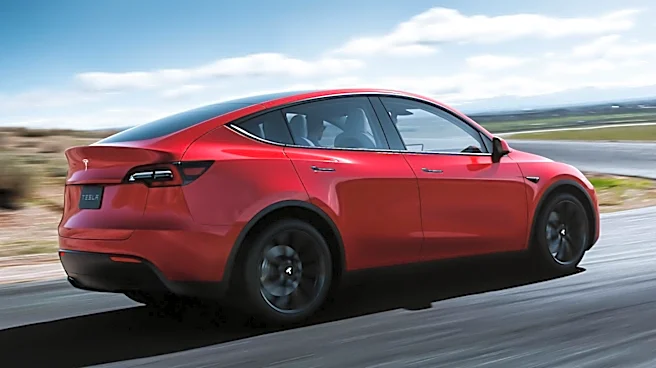
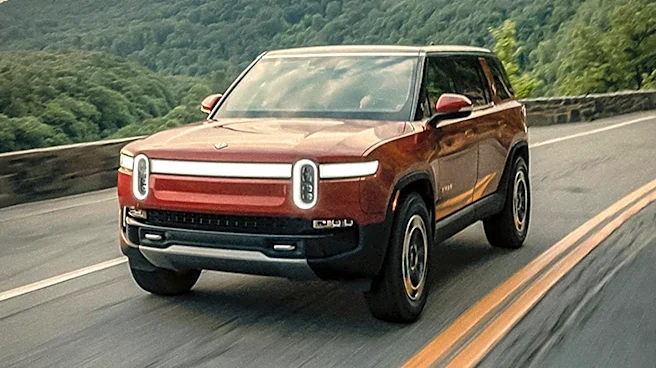
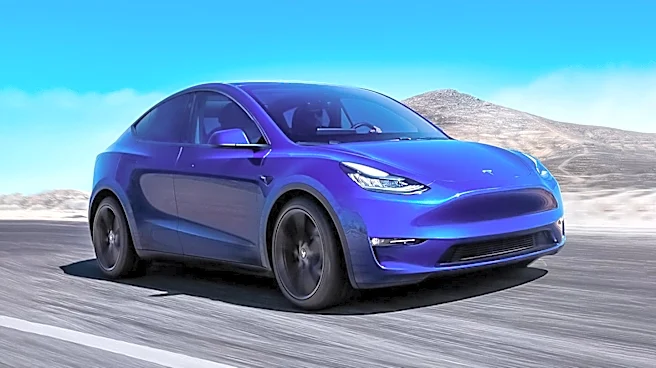
A recent real-world efficiency test compared the Rivian R2 Performance with Tesla's Model Y Performance, revealing that the R2 uses significantly more energy across various speeds. Despite both vehicles having similar EPA efficiency ratings of 105 MPGe,
the R2 consumed between 18% and 26% more energy than the Model Y in tests conducted at speeds ranging from 50 to 80 mph. The test, designed to eliminate variables, involved setting both vehicles to specific conditions, such as tire pressure and climate control settings. The results highlight the challenges Rivian faces in matching Tesla's efficiency, particularly given the R2's heavier and more utility-focused design.
Why It's Important?
The efficiency comparison between Rivian's R2 and Tesla's Model Y is crucial for consumers and the electric vehicle market. As Rivian aims to establish itself as a major player, its vehicles' efficiency directly impacts consumer perception and market competitiveness. The higher energy consumption of the R2 could influence potential buyers who prioritize efficiency and range. For Tesla, maintaining a lead in efficiency reinforces its position as a market leader. The findings also underscore the importance of real-world testing, as laboratory conditions often fail to capture the complexities of everyday driving.
What's Next?
Rivian may need to address the efficiency gap by exploring design and technological improvements to enhance the R2's performance. This could involve optimizing aerodynamics or investing in battery technology to reduce energy consumption. Additionally, Rivian might focus on marketing strategies that highlight other strengths of the R2, such as its utility features, to appeal to a broader audience. As the electric vehicle market evolves, manufacturers will likely continue to refine their offerings to meet consumer demands for efficiency and performance.