





What's Happening?
Sunrun Inc. (NASDAQ:RUN), a residential solar installer, is increasingly focusing on its battery network strategy as subscriber additions have declined. In the third quarter of 2026, Sunrun added 22,957 subscribers, a 24% decrease year-over-year. The
contracted net value per subscriber also fell by 28% to $6,645, primarily due to an increase in the discount rate used to value project cash flows, rising from 7.3% to 8.4%. Despite these challenges, battery storage accounted for 75% of new customer additions, up from 70% a year prior, indicating a strategic shift. Sunrun's battery systems demonstrated their capability by delivering over 430 megawatts during a single grid event, highlighting the potential of its virtual power plant strategy. Operating cash flow reached $301 million, though a separate cash-generation measure was $6 million after $50 million in equipment purchases tied to tax-credit eligibility.
Why It's Important?
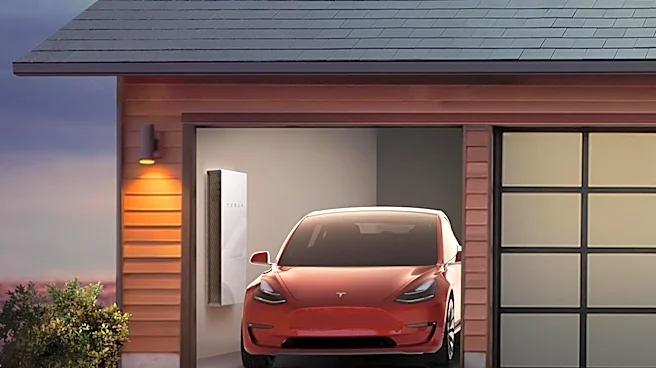
Sunrun's pivot towards a battery network strategy is crucial for its long-term viability and the broader evolution of the U.S. energy grid. As subscriber additions slow and financing costs rise, leveraging existing infrastructure to generate additional revenue streams becomes vital. The ability of Sunrun's batteries to supply power to the grid during peak demand or emergencies, known as a virtual power plant, offers a new model for energy resilience and efficiency. This strategy allows Sunrun to earn revenue by providing grid services, reducing its sole reliance on new customer acquisitions. For homeowners, connected batteries offer essential backup power, enhancing energy security. This development signifies a shift in the residential solar industry, moving beyond mere energy generation to integrated energy management and grid support, which could stabilize revenue and increase the value proposition for customers and investors alike.
What's Next?
The success of Sunrun's battery network strategy will depend on several factors, including the compensation utilities offer for grid services and the ongoing costs of building and maintaining these systems. As the company aims for roughly $200 million in full-year cash generation (excluding specific equipment purchases), improving cash generation from the battery network will be critical to support analyst confidence. The broader clean energy sector, including solar manufacturers and residential installers, is experiencing renewed interest due to expectations of stronger protection for federal green subsidies and tax credits from a Democratic Congress. This policy environment could facilitate faster project approvals and potentially improve the economics for Sunrun's battery-centric approach, making it easier to finance construction and secure customers for its electricity and grid services.
Beyond the Headlines
Sunrun's strategic emphasis on battery networks points to a significant transformation in how residential solar systems are perceived and utilized. Beyond simply generating electricity, these systems are becoming integral components of a decentralized, resilient, and intelligent energy grid. The concept of a 'virtual power plant,' where aggregated home batteries can collectively provide substantial power to the grid, represents a paradigm shift in energy management. This model not only enhances grid stability and reduces the need for traditional peaker plants but also empowers individual homeowners to become active participants in the energy market. However, the economic viability of this model is heavily influenced by regulatory frameworks and utility compensation structures, which vary by state. The ethical implications of data privacy and control over home energy systems, as well as the equitable distribution of benefits from these advanced grid services, will become increasingly important considerations as this technology proliferates.