




What's Happening?
Homeowners are increasingly focused on creating inviting outdoor living spaces that prioritize comfort, functionality, and aesthetic appeal. The key to achieving this involves strategic planning and design choices rather than solely relying on large renovation
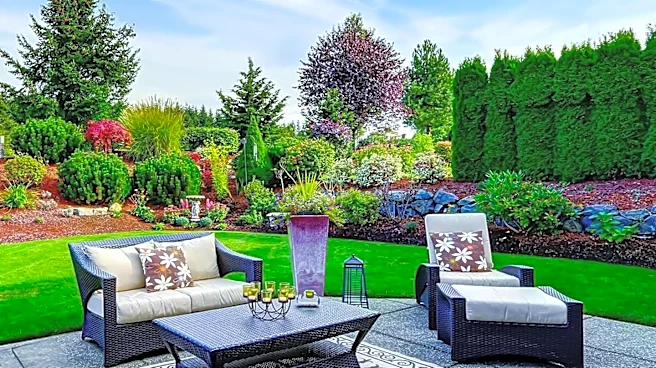
budgets. Experts suggest several ideas, including reading the space to understand its natural behavior (e.g., sun exposure, wind patterns) before making purchases. Breaking the yard into distinct zones for lounging, dining, and quiet rest is crucial, using furniture arrangement, outdoor rugs, and planters to define these areas. Prioritizing comfortable seating is emphasized, with a recommendation to mix seating types and use weather-resistant materials with soft additions like throw pillows and blankets. Shade is considered non-negotiable for daytime use, with options ranging from umbrellas to pergolas. Layered lighting is also vital to extend the usability of outdoor spaces beyond sunset, incorporating string lights, lanterns, and path lights. Additionally, installing fire features, bringing in greenery and water elements, and refreshing the space seasonally contribute to a more inviting outdoor environment.
Why It's Important?
The emphasis on creating inviting outdoor living spaces reflects a broader trend in U.S. lifestyle and homeownership, where the boundaries between indoor and outdoor living are blurring. This shift impacts various industries, including landscaping, outdoor furniture manufacturing, lighting, and home improvement. For homeowners, well-designed outdoor spaces enhance property value, provide additional areas for relaxation and entertainment, and improve overall quality of life. Businesses in these sectors stand to gain from increased demand for products and services that cater to these preferences. Conversely, companies that fail to adapt to this trend by offering comfortable, functional, and aesthetically pleasing outdoor solutions may lose market share. The focus on comfort, shade, and lighting also highlights a consumer desire for practical solutions that extend the usability of outdoor areas throughout the day and year, influencing product development and marketing strategies.
What's Next?
The trend towards enhancing outdoor living spaces is expected to continue, driving innovation in outdoor product design and landscaping services. Consumers will likely seek more integrated and smart outdoor solutions, such as automated lighting systems, weather-resistant smart furniture, and advanced shading technologies. The demand for sustainable and eco-friendly outdoor materials and practices may also grow, influencing manufacturers to develop products with a lower environmental footprint. Homeowners will continue to prioritize personalized outdoor environments that reflect their individual styles and needs, leading to a greater emphasis on custom design and flexible solutions. The seasonal refresh aspect suggests a recurring market for outdoor decor, cushions, and accessories, providing ongoing opportunities for retailers. Furthermore, the integration of technology, such as outdoor audio systems and smart fire pits, will likely become more prevalent, offering enhanced convenience and entertainment.
Beyond the Headlines
Beyond the immediate benefits of comfort and aesthetics, the focus on inviting outdoor living spaces touches upon deeper societal and psychological implications. In an increasingly digital world, these spaces offer a crucial connection to nature and a respite from indoor environments, promoting mental well-being and stress reduction. The creation of distinct zones and comfortable seating encourages social interaction and community building, fostering stronger family bonds and friendships. Ethically, the emphasis on weather-resistant and durable materials points to a growing consumer awareness of product longevity and sustainability, potentially reducing waste and promoting more responsible consumption. Culturally, these spaces are becoming extensions of personal identity, allowing homeowners to express their creativity and values through design. The long-term shift could see outdoor areas evolve into fully integrated 'rooms without walls,' equipped with all the amenities of indoor living, further blurring the lines between the built environment and the natural world.