






What's Happening?
U.S. restaurants are increasingly adopting automated and connected kitchen technologies, including digital tickets, integrated equipment, and automated production tools. This shift is driven by rising labor costs, increased food expenses, and evolving
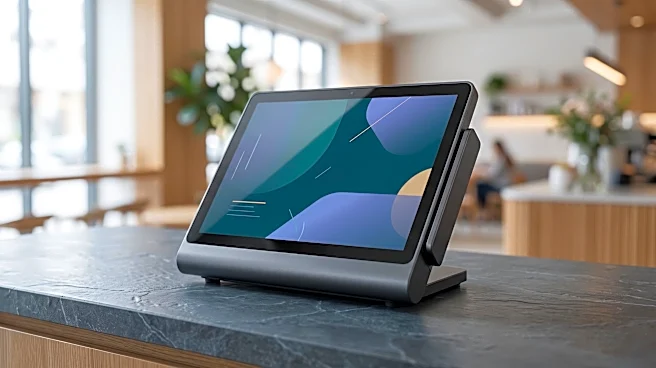
customer expectations. Kitchen display systems (KDS) are central to this trend, digitally organizing orders, routing them to appropriate stations, tracking preparation progress, and providing real-time order status. The National Restaurant Association's 2025 Kitchen Innovations highlighted the growing use of connected kitchen technology, robotics, multifunction equipment, and automation aimed at reducing labor demands and operating costs. Industry experts also note the expanding connection between internet-enabled equipment and overall kitchen operations. Furthermore, 2026 restaurant technology trends indicate a move towards more unified, API-based technology architectures, with artificial intelligence (AI), unified ordering, self-service tools, smarter payments, and personalized loyalty programs gaining significant momentum. This integration provides a clearer view of sales, orders, menus, payments, customer activity, and location performance, while also reducing duplicate data entry and ensuring consistency across various ordering channels and restaurant locations.
Why It's Important?
This technological transformation is crucial for the U.S. restaurant industry, which faces significant operational pressures. By automating and connecting kitchen processes, restaurants can mitigate the impact of rising labor and food costs, thereby improving profitability and operational efficiency. The adoption of unified, API-based technology architectures allows for seamless data flow across different systems, providing restaurant managers with comprehensive insights into their operations. This data-driven approach enables better decision-making regarding sales trends, labor needs, inventory levels, and other business priorities. For consumers, these advancements can lead to faster service, more accurate orders, and personalized experiences through improved loyalty programs and self-service options. The shift also addresses the challenge of managing diverse ordering channels, from in-store to online and third-party delivery, by centralizing these operations and ensuring consistent information. Ultimately, this trend is vital for the long-term sustainability and competitiveness of U.S. restaurants in a dynamic market.
What's Next?
The U.S. restaurant industry is expected to continue its rapid adoption of advanced technologies. Future developments will likely focus on further integration of AI into everyday operations, including demand forecasting, scheduling, inventory review, and marketing efforts. Voice AI is anticipated to expand across ordering platforms, particularly in drive-thrus and kiosks, to enhance efficiency and customer experience. Restaurants will also prioritize unifying all ordering channels—in-store, online, and delivery—into single, connected systems to streamline operations and improve data consistency. Self-service ordering options, such as kiosks and QR code menus, will become more mainstream, offering customers greater control and reducing staff workload. The emphasis will remain on creating a more connected technology stack that provides a holistic view of sales, orders, and customer behavior, enabling restaurants to adapt quickly to market changes and consumer preferences. This ongoing evolution aims to create more efficient, data-driven, and customer-centric restaurant environments.
Beyond the Headlines
Beyond the immediate operational benefits, the widespread adoption of connected kitchen technologies and unified platforms in U.S. restaurants signals a broader shift in the nature of hospitality work and customer interaction. The increased automation could lead to a redefinition of roles within restaurants, with a greater emphasis on technology management and customer relationship building rather than repetitive manual tasks. This technological evolution also raises questions about data privacy and security, as more customer and operational data is collected and integrated across systems. Furthermore, the personalized loyalty programs and AI-driven recommendations could create a more tailored dining experience, potentially fostering deeper customer engagement but also raising ethical considerations regarding consumer profiling. The move towards API-based architectures suggests a future where restaurant technology ecosystems are highly interoperable, allowing for greater innovation and customization, but also potentially increasing reliance on third-party tech providers. This transformation is not just about efficiency; it's about fundamentally reshaping the restaurant experience for both operators and patrons.