






What's Happening?
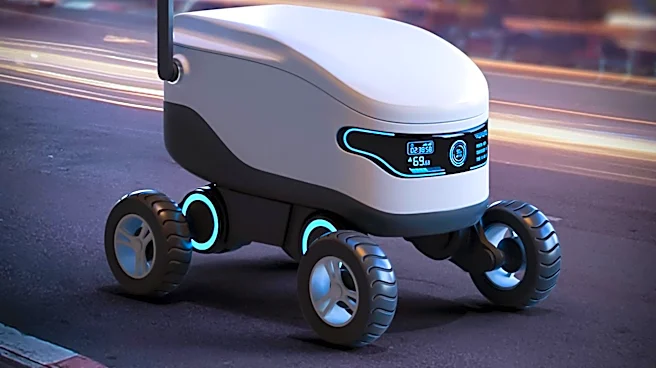
Starship Technologies, a San Francisco-headquartered company specializing in autonomous robot delivery, is expanding its operations in Finland. The company, founded in 2014, is actively recruiting a Field Assistant for its hub in Jyväskylä. This role
involves deploying robots to partner locations across Finland, supporting operational and maintenance activities in the Jyväskylä hub, and performing maintenance work on the robots. Starship Technologies focuses on last-mile logistics, providing autonomous sidewalk delivery for food, groceries, and packages. The company has completed millions of autonomous deliveries, traveling millions of miles, and currently performs over 140,000 road crossings daily. Their mission is to offer affordable, sustainable, and zero-emission deliveries, aiming to reduce congestion and pollution while enhancing the quality of life for residents and empowering seniors and disabled individuals.
Why It's Important?
This expansion signifies Starship Technologies' continued growth in the global autonomous delivery market, reinforcing its position in Northern Europe. The company's focus on sustainable and affordable delivery solutions addresses increasing consumer demand for convenience and environmentally friendly options. By reducing congestion and pollution through zero-emission deliveries, Starship Technologies contributes to urban sustainability goals. The service also provides a valuable resource for local businesses and offers increased accessibility for seniors and disabled people, enhancing their independence. The development of such technology has broader implications for the logistics industry, potentially transforming traditional delivery models and creating new job opportunities in specialized technical and operational roles.
What's Next?
Starship Technologies is actively seeking to fill the Field Assistant position, indicating an immediate focus on strengthening its operational capabilities in Finland. The company's continued investment in personnel and infrastructure suggests further expansion of its autonomous delivery services within the region and potentially into other European markets. As the company continues to scale, it will likely explore partnerships with more local businesses and expand its service coverage. The ongoing development and deployment of these robots will also contribute to advancements in autonomous navigation and artificial intelligence, potentially leading to more sophisticated and efficient delivery solutions in the future. The success of these operations could serve as a model for other cities and countries looking to adopt similar sustainable delivery technologies.
Beyond the Headlines
The proliferation of autonomous delivery robots like those from Starship Technologies raises important considerations beyond immediate operational benefits. Ethically, the deployment of these robots on sidewalks necessitates careful planning to ensure pedestrian safety and accessibility, particularly for individuals with disabilities. Legally, regulatory frameworks will need to evolve to address issues such as liability in case of accidents, data privacy, and the integration of autonomous vehicles into public spaces. Culturally, the increasing presence of robots in daily life could shift societal perceptions of technology and labor, potentially leading to discussions about job displacement and the future of work in the logistics sector. The long-term impact on urban planning and infrastructure will also be significant, as cities adapt to accommodate these new forms of transportation and delivery.