






What's Happening?
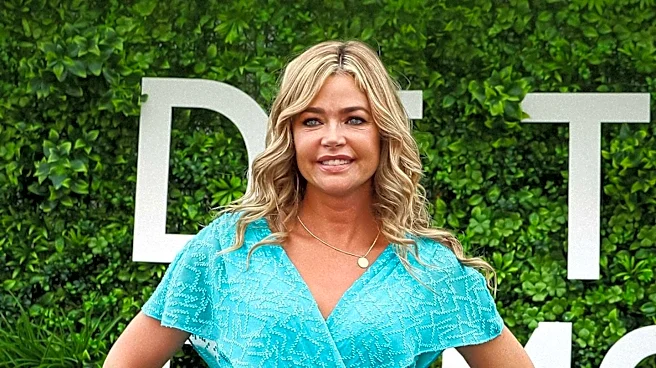
Actress Denise Richards has openly discussed her recent facelift, sharing her motivations and experiences with Allure magazine. Richards stated that her decision was driven by a desire to 'put things back up where they were before.' She highlighted the difficulty
of concealing such a procedure, especially given her long career in the public eye, which began in her 20s. Her candidness contributes to a broader conversation among celebrities regarding cosmetic enhancements. This dialogue is shifting towards greater transparency, focusing on why individuals choose these procedures, the specific methods they undergo, and their satisfaction with the outcomes. Richards's openness aims to normalize discussions around cosmetic surgery, moving away from secrecy and towards a more honest portrayal of personal choices in appearance.
Why It's Important?
Denise Richards's public disclosure about her facelift is significant as it challenges the traditional secrecy surrounding celebrity cosmetic procedures. This transparency can influence public perception, potentially reducing the stigma associated with aesthetic surgeries and encouraging more open conversations about body image and personal choices. For the beauty and cosmetic surgery industries, such high-profile endorsements, even if not direct, can increase interest and acceptance among the general public. It also sets a precedent for other public figures to be more forthcoming, fostering a more realistic understanding of how celebrities maintain their appearances. This shift could empower individuals to make informed decisions about their own bodies without feeling pressured by unrealistic beauty standards often perpetuated by undisclosed cosmetic work.
What's Next?
The ongoing trend of celebrities like Denise Richards openly discussing their cosmetic procedures is likely to continue shaping public discourse around beauty standards and personal autonomy. This increased transparency may lead to a greater demand for detailed information about various cosmetic treatments, prompting industry professionals to provide more comprehensive and accessible educational resources. We might also see a rise in media coverage that delves deeper into the motivations and psychological aspects behind cosmetic surgery, moving beyond superficial discussions. Furthermore, this openness could encourage more individuals to consider cosmetic procedures, feeling more informed and less judged. Conversely, it could also spark debates about the pressures celebrities face regarding their appearance and the broader societal implications of aesthetic enhancements.
Beyond the Headlines
Denise Richards's frankness about her facelift touches upon deeper societal implications regarding authenticity, aging, and the pressures of public life. In an era dominated by curated online personas and filtered images, her honesty offers a refreshing counter-narrative, suggesting that transparency about personal choices, even those related to appearance, can foster a more genuine connection with the public. This move also subtly critiques the often-unrealistic beauty standards prevalent in Hollywood and beyond, where the appearance of effortless youth is frequently maintained through undisclosed interventions. Her decision to speak out could contribute to a cultural shift where aging and cosmetic enhancements are viewed not as failures to be hidden, but as personal decisions that can be openly discussed, thereby promoting a more inclusive and realistic understanding of beauty across different life stages.