


What's Happening?
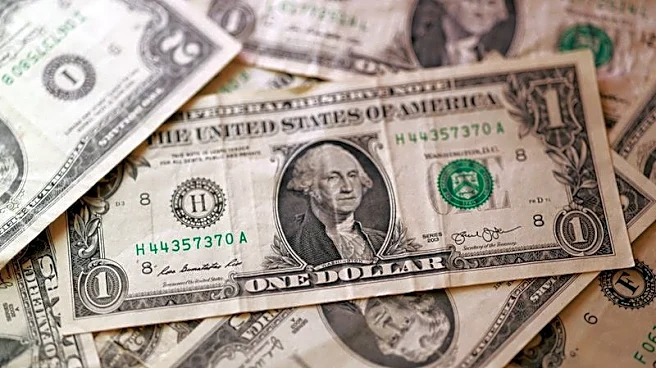
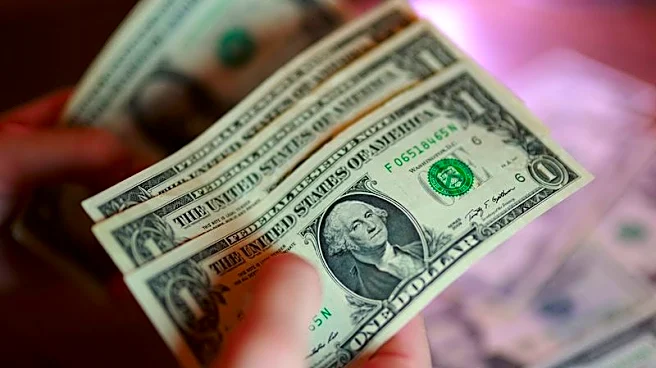
The U.S. dollar has recently surged back towards its April 2025 highs, demonstrating strong upward momentum. This rise is identified as a potentially overlooked risk to global markets. The U.S. dollar serves as the world's primary reserve, trading, and
funding currency, with international commerce frequently conducted in dollars. Governments and corporations globally borrow extensively in dollars, and major commodities like oil, copper, and gold are priced in dollars. Approximately 60 percent of international debt securities are denominated in U.S. dollars, and non-bank borrowers outside the United States owe over US$15 trillion in dollar-denominated loans and bonds, according to the Bank for International Settlements. This strong dollar can tighten financial conditions worldwide and expose hidden vulnerabilities, particularly for emerging market companies that earn revenue in local currencies but have dollar-denominated debt.
Why It's Important?
A strong U.S. dollar, while often seen as a sign of American economic strength, can have significant negative repercussions globally. For companies and governments in emerging markets, a rising dollar increases the burden of their dollar-denominated debt when converted to their local currencies, even if their operational performance remains unchanged. This can lead to financial instability across thousands of entities. Furthermore, a strengthening dollar makes dollar-priced commodities more expensive for foreign buyers, potentially reducing demand and putting downward pressure on prices for essential materials. This could discourage investment in new supply, leading to future shortages, especially as demand for resources grows due to developments like AI data center buildouts. Weaker domestic currencies, a consequence of a strong dollar, can also lead to increased imported inflation, forcing central banks outside the U.S. to make difficult choices between raising interest rates to defend their currencies or tolerating further depreciation, potentially hindering economic growth.
What's Next?
If the U.S. dollar's upward momentum continues, global financial conditions are expected to tighten further. This could lead to increased financial strain for international borrowers, particularly those in emerging markets with significant dollar-denominated debt. Central banks outside the United States may face continued pressure to adjust their monetary policies, potentially leading to interest rate hikes to combat imported inflation, even in economies that might otherwise benefit from looser policies. The impact on commodity markets could also intensify, with sustained price weakness potentially leading to underinvestment in new supply, setting the stage for future shortages. Investors and policymakers will likely need to monitor the dollar's trajectory closely, as its continued strength could trigger a cascade of economic challenges globally.
Beyond the Headlines
The surging U.S. dollar highlights a fundamental vulnerability in the global financial system: its heavy reliance on a single currency. This reliance means that U.S. monetary policy and economic performance have profound, often unintended, consequences for the rest of the world. The ethical dimension arises from the disproportionate impact on developing economies, which often have less capacity to absorb currency shocks. Legally, the prevalence of dollar-denominated debt creates complex cross-border financial obligations that can be difficult to restructure during periods of currency volatility. Culturally, the dollar's status as the global reserve currency reinforces American economic influence, but also places a significant responsibility on U.S. policymakers to consider the international ramifications of their decisions. This situation could accelerate discussions about diversifying global reserve assets or strengthening regional currency blocs to mitigate future risks.