






What's Happening?
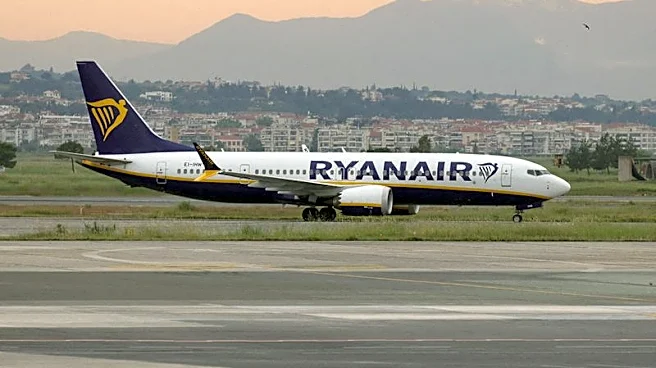
Ryanair has announced a 34% decrease in its first-quarter profit, primarily due to the Middle East crisis affecting consumer bookings and a surge in fuel prices. The airline's profit after tax fell to €538 million, with a 6% decline in ticket fares. Operating
costs increased by 11% as the price of unhedged fuel more than doubled. Ryanair's CEO, Michael O'Leary, noted that the airline's conservative hedging policy provides a cost advantage over competitors, despite the challenging environment. The company is preparing for a difficult winter, with ongoing geopolitical tensions and economic uncertainties impacting its financial outlook.
Why It's Important?
Ryanair's profit decline reflects the broader impact of geopolitical tensions on the airline industry, highlighting the challenges of managing costs and maintaining profitability amid external shocks. The situation underscores the importance of strategic fuel hedging and cost management for airlines. Ryanair's experience serves as a warning for other carriers, emphasizing the need for resilience and adaptability in the face of volatile market conditions. The company's strong financial position and efficient fleet provide some insulation against these challenges, but the industry as a whole may face continued volatility.
What's Next?
Ryanair is bracing for a challenging winter, with geopolitical tensions and economic uncertainties expected to persist. The airline is hedged for 80% of its fuel needs until 2027, providing some protection against price volatility. Ryanair plans to continue expanding its fleet with more efficient aircraft, aiming to grow its passenger numbers significantly by 2034. The company will closely monitor geopolitical developments and fuel prices, which will influence its financial performance and strategic decisions in the coming months.