






What's Happening?
Xaira Therapeutics, an innovative biotech startup, is actively recruiting a Robotics Engineer specializing in Lab Automation. The company is developing a next-generation platform designed to revolutionize biological experiments through advanced automation
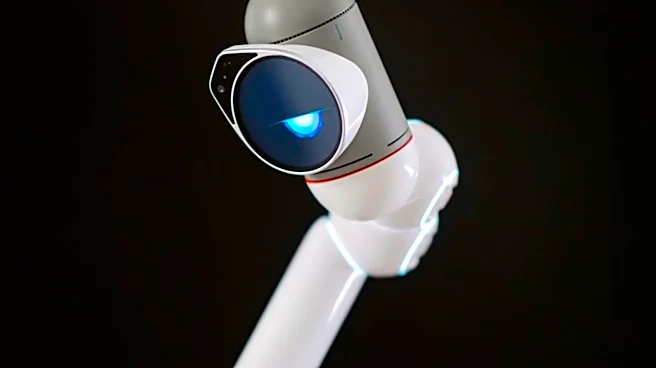
and robotics. This platform will integrate robotic arms, mobile platforms, lab instruments, sensors, computer vision, workflow orchestration, and AI-enabled autonomy. The goal is to significantly enhance the speed, reliability, reproducibility, and scalability of experimental biology. The Robotics Engineer will be responsible for translating scientific workflows into robust automated systems, working collaboratively with biologists, chemists, automation engineers, software engineers, and robotics experts. This hands-on role involves building, integrating, testing, and debugging physical systems, contributing to areas such as robotic manipulation, instrument integration, perception, task execution, simulation, and multi-station lab automation workflows.
Why It's Important?
This initiative by Xaira Therapeutics is significant for the biotech sector and the broader scientific community. By leveraging AI and robotics, the company aims to overcome traditional bottlenecks in drug discovery and development, which are often characterized by labor-intensive and time-consuming manual processes. The development of such a platform could dramatically accelerate the pace of scientific research, leading to faster identification of novel therapies and improved success rates in drug development. This technological advancement has the potential to create a more efficient and reliable experimental environment, reducing human error and increasing data consistency. For the U.S. biotech industry, this represents a push towards greater innovation and competitiveness on a global scale, potentially leading to breakthroughs in treating historically hard-to-drug molecular targets and enabling better target elucidation and patient stratification.
What's Next?
The immediate next step for Xaira Therapeutics is to successfully recruit a skilled Robotics Engineer to join their interdisciplinary team. Once onboard, the engineer will play a crucial role in the ongoing development and implementation of the lab automation platform. The company's long-term vision involves continually enabling the identification of novel therapies and improving drug development success through generative AI models for protein and antibody therapeutics, as well as foundation models for biology and disease. As the platform evolves, it is expected to integrate more advanced robotics, autonomy, and AI-enabled laboratory automation. This will likely involve continuous collaboration between robotics experts, software engineers, and scientific researchers to refine and expand the capabilities of the automated systems, ultimately transforming how biological experiments are conducted and scaled.
Beyond the Headlines
The integration of AI and robotics in laboratory settings raises profound implications for the future of scientific research and the workforce. While it promises unprecedented efficiency and discovery potential, it also necessitates a re-evaluation of traditional scientific roles and the development of new skill sets. The ethical considerations surrounding AI-driven research, such as data privacy, algorithmic bias, and the responsible deployment of autonomous systems, will become increasingly important. Furthermore, the shift towards highly automated labs could lead to a concentration of advanced research capabilities in well-funded institutions, potentially widening the gap between resource-rich and resource-poor research environments. This development also highlights the growing convergence of diverse scientific and engineering disciplines, fostering a new era of interdisciplinary innovation in the pursuit of medical advancements.