








What's Happening?
U.S. biotech leaders are expressing significant concern that without decisive action against China's rapid innovation in the biotech sector, the American industry faces a decline similar to the 'Rust Belt' phenomenon. Jake Becraft, CEO of Strand Therapeutics,
highlighted the threat of Chinese biotechs surpassing U.S. homegrown life sciences, noting that current lab spaces are already underutilized. The U.S. biotech industry is experiencing a dual challenge: the rise of Chinese innovation, which is attracting Big Pharma for licensing deals, and policy unpredictability in the U.S. regarding investments in Chinese biotechs and intellectual property ownership. Patrowski Lawson, founder of KPM Group and the American Biotech Innovation Alliance (ABIA), emphasized that this lack of predictability makes it difficult to operate businesses. Jeremy Levin, co-founder and executive chair of Ovid Therapeutics, stressed the need for a formalized plan to advance and protect the U.S. biotech industry, including recommendations for a White House Office of Biotechnology, streamlined clinical trials, and bolstered manufacturing.
Why It's Important?
The potential decline of the U.S. biotech industry has profound implications for national security, public health, and economic stability. If China becomes the dominant producer of medicines, the U.S. could become dependent on an adversarial nation for critical healthcare supplies, posing a significant national security risk. Economically, a weakened biotech sector would mean a loss of high-value jobs, reduced innovation, and a diminished competitive edge in a crucial global industry. The current policy uncertainty and the challenges in clinical trial processes are hindering the ability of U.S. companies to compete effectively. This situation could lead to a brain drain, with capital and talent migrating to more favorable environments, ultimately impacting the availability and affordability of new treatments for American patients.
What's Next?
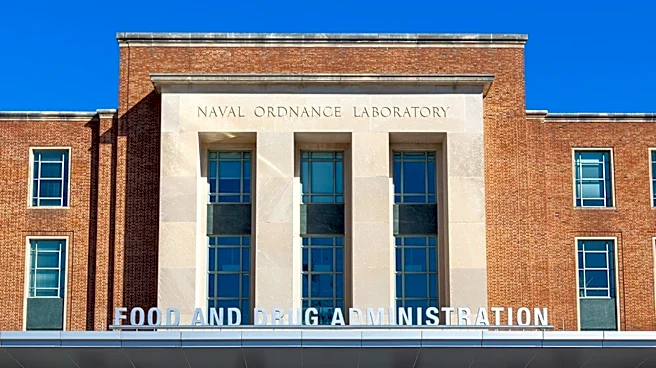
BIO has introduced a plan recommending the creation of a White House Office of Biotechnology, streamlining clinical trials, and bolstering manufacturing to support the U.S. biotech industry. There is a call for the FDA to simplify its processes, potentially by adopting models from countries like Australia, which conducts significantly more clinical trials relative to its population. Biotech leaders also suggest that academic centers and hospitals need to reduce bureaucratic hurdles from institutional review boards to accelerate drug development. The ongoing discussions in Congress regarding potential restrictions on American investments in Chinese biotechs and intellectual property will continue to shape the industry's landscape. The focus will be on creating a more predictable and supportive policy environment to encourage domestic innovation and investment.
Beyond the Headlines
The concerns raised by biotech leaders extend beyond immediate economic competition to fundamental questions about national sovereignty and the future of scientific innovation. The comparison to the 'Rust Belt' evokes a powerful image of industrial decline and its societal consequences, suggesting that the stakes are incredibly high. This situation highlights the tension between global scientific collaboration and national strategic interests, particularly when dealing with a geopolitical rival. The call for public education on the importance of the biotech industry underscores a broader challenge in democratic societies: ensuring public understanding and support for complex scientific and economic policies. Ultimately, the outcome will determine whether the U.S. can maintain its leadership in a field critical for human well-being and national power, or if innovation will indeed 'migrate' to other nations.