





What's Happening?
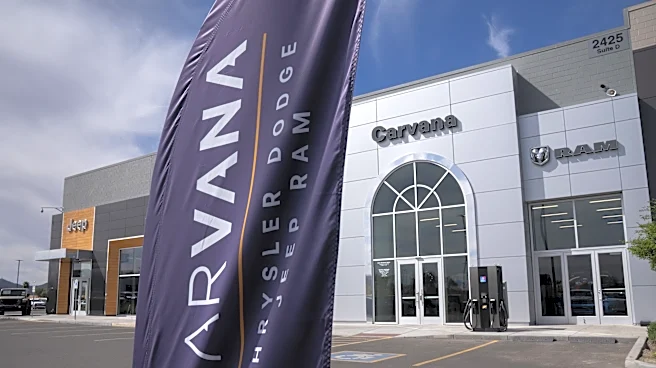
Carvana, a prominent online vehicle retailer, is expanding its online sales strategy to include new cars and trucks, utilizing its franchised dealerships as service locations and test-drive centers. This approach marks a significant departure from traditional
dealership models, where vehicles are typically sold on-site. Carvana's president of special projects, Tom Taira, emphasized that all vehicle sales, whether new or used, are conducted online. The company aims to grow its market share and customer base by integrating new vehicle sales into its existing online platform. Carvana has invested approximately $171 million in acquiring Stellantis franchised dealerships, with plans to use these locations as 'playgrounds' for consumers to explore and test vehicles before purchasing them online.
Why It's Important?
Carvana's strategy could significantly impact the U.S. automotive retail industry, which traditionally relies on physical dealerships for sales. By shifting sales online, Carvana challenges the conventional dealership model, potentially influencing other retailers to adopt similar strategies. This move could lead to increased competition among dealerships and alter consumer expectations regarding vehicle purchasing. Carvana's approach also highlights the growing trend of digital transformation in retail, as consumers increasingly prefer online shopping experiences. The success of this strategy could encourage other industries to explore similar digital-first approaches, potentially reshaping retail landscapes across various sectors.
What's Next?
Carvana plans to continue refining its online sales process and test-drive experiences at its franchised dealerships. The company is focused on ensuring a seamless integration of new vehicle sales into its existing platform, with an emphasis on customer satisfaction and transparency. As Carvana expands its new vehicle offerings, it may face challenges related to inventory management and customer service, particularly in ensuring that test-drive experiences align with consumer expectations. The company is likely to monitor consumer feedback closely and adjust its strategy as needed to maintain its competitive edge in the automotive retail market.